
Author: Akbar Aziz
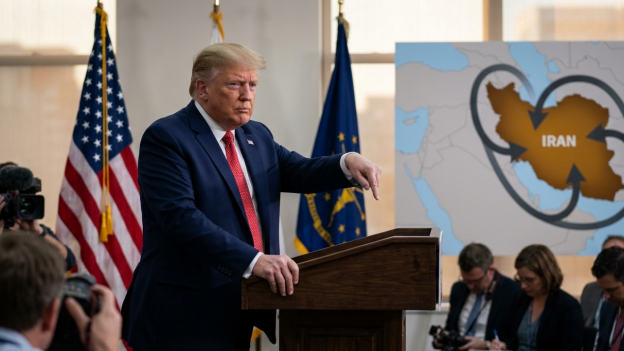
Washington DC, April 30, 2026 (GGPI): US President Donald Trump is doubling down on a comprehensive naval blockade against Iran, betting that ongoing economic and energy disruptions will compel Tehran to make concessions, even though historical evidence indicates that such strategies seldom produce clear results.
Central to Washington’s broader attempt to force compliance on nuclear talks is the US blockade, which aims at Iranian oil exports and vital maritime routes. Trump claims that this action is more successful than a straight military attack since it weakens Iran’s economy and strategic power.
Recent events show that the blockade is already having an effect on international energy markets, with disruptions in the Strait of Hormuz, a key bottleneck for oil shipments, causing price instability and limiting ship traffic.
Nonetheless, experts warn that the outcomes of blockade tactics have varied historically. Although they can cause considerable economic hardship, they frequently fail to force strategic surrender or regime change; rather, they strengthen national resilience and domestic consolidation in the targeted nations.
Trump’s strategy, from a theoretical standpoint, demonstrates a strong Realist bent, prioritizing strategic dominance, economic warfare, and coercive force. The goal is to shift Iran’s cost-benefit analysis without starting a war.
Read More: Europe’s Strategic Recalibration Accelerates Amid Ukraine War Pressures
Meanwhile, detractors contend that the approach carries the risk of unintended outcomes such as humanitarian consequences, regional escalation, and additional disruption to international supply chains. Oil prices have increased and geopolitical instability has intensified as a result of the blockade.
Iran, for its part, has responded to the pressure effort by indicating its opposition to what it sees as economic compulsion and cautioning that ongoing limitations may result in retaliation. With each side entrenched in rival demands, the continuing standoff mirrors a larger strategic stalemate.
The situation underscores the continuing importance, as well as the boundaries of economic statecraft in contemporary international relations at the system level. Although weapons like sanctions and blockades are still essential to great power strategy, their efficacy is contingent upon geopolitical environment, national resilience, and global alignment.
Trump’s dependence on a blockade strategy highlights a risky bet in the ongoing US-Iran conflict. It is still unclear if it will be able to break Iran or just extend the conflict, which would have major consequences for the security of the world’s energy supply and regional stability.
Note: Image is AI generated and for reference.
About the Author:
Akbar Aziz is a Geopolitical Analyst and BS International Relations student at the National University of Modern Languages, Rawalpindi. He focuses on Security Studies and Global Strategic Affairs. He is also a Research Contributor at Global Geopolitical Insight & The Opinion Desk where he writes on contemporary international issues.