
Author: Hadiya Zainab
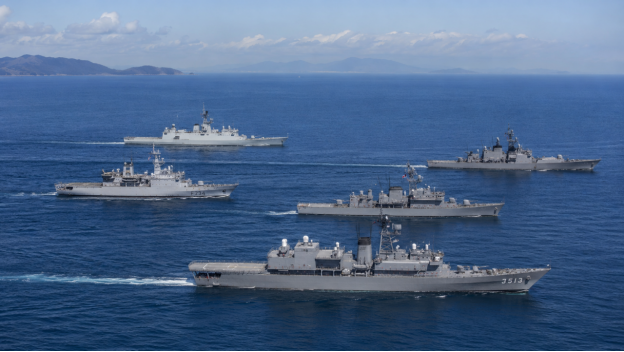
Tokyo, May 6, 2026 (GGPI): On Wednesday, Japan fired a live anti-ship missile during joint military operations alongside U.S., Australia and the Philipinnes. The missile hit a decommissioned Phillipine naval vessel facing the South China Sea. This was not just a routine drill, or “test fire”, this was symbolic and important because it involved Japan taking part in a live fire excersice outside its territory in a region that has become strategically and economically important to the world.
Its importance can be measured due to various reasons. Recently China has increased its assertiveness in the South China Sea and its relations with Taiwan have also deteriorated in recent times. By conducting these drills, Japan and its allies showcase their military position and preparedness against any hostile naval movements. Moreover, the importance of the location does not go unnoticed: Northern Philippines sits close to key sea lanes and not far from Taiwan, so any military activity there immediately carries strategic meaning.
Read More: The United States in a Shifting Global Order: Maintaining Hegemony Amid Rising Multipolarity
In conclusion, Japan’s missile firing was less about the missile itself and more signaling alignment. It showed that Japan, which had loosened its postwar military operations, is becoming more active in regional defense and cooperation. For China, this means encirclement and for U.S. it is meant to show that any attempt to change the world balance by force would face coordinated resistance.
Note: The image is AI generated and only for reference.
About the Author: Hadiya Zainab is a BS International Relations student at the National University of Modern Languages (NUML), Rawalpindi, and a Research Fellow at Global Geopolitical Insight. Her research interests focus on defence studies, regional security, and contemporary geopolitical dynamics, with a particular emphasis on Asia.