
Author: Akbar Aziz
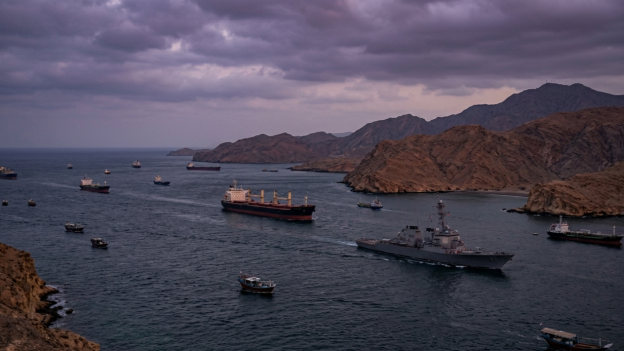
Washington DC (GGPI): In a significant escalation of tensions in the Middle East, the United States Navy reportedly carried out a targeted strike on an Iranian cargo vessel on April 20th 2026, intensifying the already volatile dynamics between the United States and Iran.
According to preliminary reports, the vessel was suspected of transporting military-grade supplies, potentially linked to Iran’s regional proxy networks. While official confirmation remains limited, defence analysts suggest that the strike aligns with Washington’s broader strategy of disrupting logistical supply chains that could enhance Iran’s operational capabilities across the region.
This development comes at a time of heightened confrontation, particularly in the context of the ongoing US-Israel-Iran crisis. Observers argue that the targeting of a cargo vessel marks a shift from indirect containment strategies toward more overt military signalling. The move underscores a growing willingness by the United States to engage in pre-emptive actions aimed at curbing perceived threats.
Read More: United States and Iran Move Towards Second Round of Diplomatic Talks
From a theoretical standpoint, this action reflects a classic Realist approach in international relations, where states prioritize security and survival over diplomatic restraint. By neutralizing suspected supply routes, the United States appears to be reinforcing deterrence while simultaneously projecting power in a contested geopolitical space.
Iran, on the other hand, is likely to interpret the strike as a violation of its sovereignty and an act of aggression. Historically, Tehran has relied on asymmetric warfare and regional alliances to counterbalance US military superiority. Analysts warn that retaliation, either direct or through proxy actors, remains a strong possibility, potentially widening the scope of conflict.
The maritime domain has increasingly become a critical arena for strategic competition. Key shipping routes in the region are vital for global trade and energy flows, making any disruption a matter of international concern. The latest incident raises fears of further instability in already sensitive waterways.
Diplomatically, this strike could complicate any ongoing or potential negotiations. While backchannel communications may still be active, such kinetic actions tend to harden positions on both sides, reducing the immediate prospects for de-escalation.
Overall, the US naval strike on the Iranian cargo vessel signals a dangerous phase in the evolving conflict. It highlights a transition from strategic posturing to direct engagement, with far-reaching implications for regional stability and global security.
Note: Image is AI generated and for reference.
About the Author:
Akbar Aziz is a Geopolitical Analyst and BS International Relations Student at the National University of Modern Languages, Rawalpindi. He focuses on Security Studies and Global Strategic Affairs. He is also a Research Contributor at Global Geopolitical Insight & The Opinion Desk where he writes on contemporary international issues.