
Author: Amna Masood
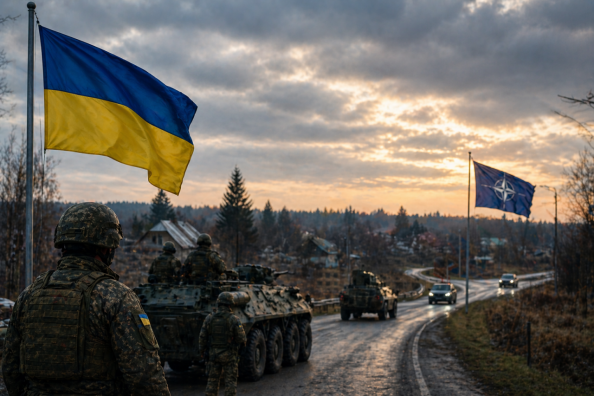
Brussels/Kyiv/Warsaw, April 30, 2026 (GGPI): Security tensions across Eastern Europe have escalated over the past 24 hours as renewed military activity in Ukraine has prompted a coordinated response from NATO and European allies.
Recent reports indicate a surge in aerial threats and missile activity targeting strategic locations in Ukraine, raising concerns about a potential expansion in the scale and intensity of the conflict. Ukrainian defense systems have been actively engaged in intercepting incoming threats, while authorities continue to assess damage to critical infrastructure. The developments have reinforced fears of prolonged instability in the region.
In response, NATO has signaled heightened readiness across its eastern flank. Member states bordering Ukraine and Russia, particularly Poland and the Baltic countries, have increased surveillance operations and reinforced defensive deployments. NATO officials have emphasized that these measures are precautionary, aimed at deterring any spillover of conflict into allied territories.
Read More: Pakistan Opens Overland Trade Routes to Iran amid Strait of Hormuz Disruptions
At the political level, European Union leaders have reiterated their support for Ukraine, stressing the importance of sustained military and financial assistance. Discussions are ongoing in Brussels regarding additional aid packages and long-term commitments to Ukraine’s defense capabilities. However, differences remain among member states over the scale and pace of support, reflecting broader strategic and economic considerations.
The situation has also intensified debates within Europe regarding defense spending and strategic autonomy. Several governments are accelerating plans to enhance military preparedness, citing the need to adapt to an increasingly volatile security environment. This includes investments in air defense systems, intelligence coordination, and rapid response capabilities.
From a broader perspective, the latest developments underscore the fragile security landscape in Europe, where localized escalations carry wider geopolitical implications. The conflict continues to test NATO’s cohesion and the EU’s ability to maintain a unified strategic stance.
While the situation remains dynamic, the past 24 hours highlight a renewed phase of tension, with both military and diplomatic dimensions shaping the trajectory of the crisis.
Note: Image is AI generated for reference
About the Author:
Amna Masood is a Geopolitical Analyst and BS International Relations Student at National University of Modern Languages, Rawalpindi, Research Focus: Geopolitics of Europe