
Author: Menahil Hasna Awan
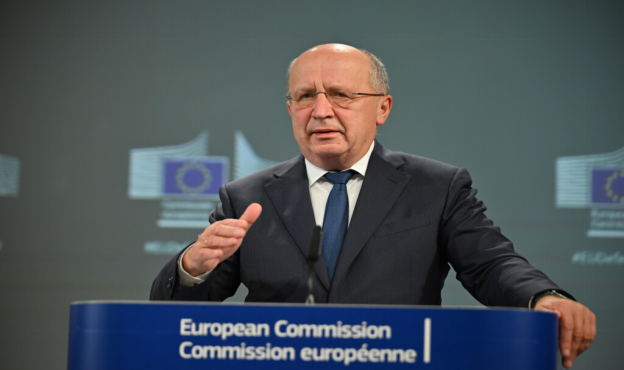
Brussels (GGPI): On April 20,2026 EU Defence Commisioner Andrius Kullibus proposed of creating a new Defence Alliance with its own army, as US less interest in Europe’s security.
Andrius Kubilius has put forward a significant proposal that could reshape Europe’s security architecture: the creation of a new European defence alliance with a permanent, unified army. His suggestion comes at a time when the United States is increasingly prioritizing the Indo-Pacific region, raising concerns in Europe about long-term security guarantees.
Speaking on April 17, Kubilius argued that the current legal framework of the European Union may not be sufficient to build a fully integrated defence system. To address this, he proposed a new intergovernmental treaty that would go beyond existing EU structures. Notably, his vision includes participation from non-EU countries such as the United Kingdom, Norway, and Ukraine, reflecting a broader, more flexible security arrangement.
This idea builds on earlier calls by Ursula von der Leyen to strengthen Europe’s Defence capabilities through increased military spending, improved industrial capacity, and closer coordination among member states. However, Defence policy in Europe remains largely under national control, which complicates efforts toward deeper integration.
Read More: The Future of the European Union in a Fragmented World Order
Kubilius’s proposal goes further by suggesting the establishment of a European Security Council, a centralized military headquarters, and a standing army of up to 100,000 troops. These measures would represent a major shift from the current system, where cooperation is largely voluntary and decentralized.
The debate has gained urgency following remarks by Donald Trump, which have heightened European concerns about reliance on American security support within NATO .While the proposal remains at an early stage, it signals a growing recognition that Europe may need to take greater responsibility for its own Defence in an increasingly uncertain global security environment.
Note : Image is taken from open resources
About the Author:
Menahil Hasna Awan (Geopolitical Analyst and BS International Relations Student at National University of Modern Languages, Rawalpindi , Research Fellow at Global Geopolitical Insights, Research focus: Defence Studies)