
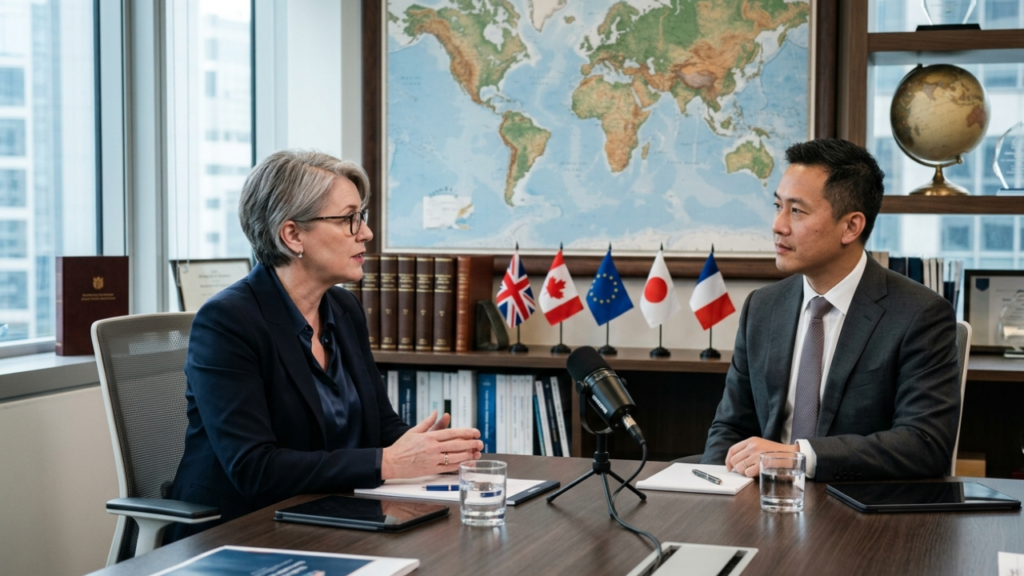
Interviewer (GGPI): Today we have the pleasure of speaking with Dr. Ayesha Tariq, a renowned expert in international relations and strategic studies. Dr. Tariq will help us explore the emerging trends that are reshaping global geopolitics in the 21st century.
Dr. Ayesha Tariq: Thank you for having me. It’s a pleasure to discuss these issues. Global politics is evolving rapidly, and understanding the emerging trends is critical for policymakers, analysts, and the public alike.
Key Emerging Issues in Global Geopolitics
GGPI: To begin, what do you consider the most significant emerging issues in global geopolitics today?
Dr. Tariq: There are several interconnected trends that are particularly important. First, we are witnessing shifting power dynamics. Historically, global power was dominated by the West, particularly the United States and Europe. Today, Asia’s role is rapidly increasing. China’s economic and technological rise, India’s growing regional influence, and Southeast Asia’s strategic position in trade routes are reshaping global balance. This shift doesn’t imply conflict but rather a redistribution of influence, which requires careful diplomacy and multilateral cooperation.
Second is technological transformation. Artificial intelligence, quantum computing, 5G, space technologies, and cybersecurity capabilities are redefining economic power and security considerations. Countries that lead in these areas gain strategic advantages, not just militarily but in global trade, governance, and standards-setting.
Third, climate and resource-related issues are emerging as central geopolitical factors. Climate change, water scarcity, and the transition to renewable energy are no longer purely environmental concerns—they are geopolitical. Access to critical minerals for batteries, solar panels, and advanced electronics can define alliances and influence trade strategies.
Finally, non-traditional security threats—such as pandemics, cyberattacks, and misinformation campaigns—have become key considerations. The COVID-19 pandemic, for instance, highlighted how global health issues can quickly affect geopolitics, supply chains, and economic stability. Cooperation in these areas has become as important as traditional diplomacy.
Role of International Institutions
GGPI: How are international institutions responding to these emerging issues?
Dr. Tariq: Institutions like the UN, WTO, ASEAN, and regional organizations continue to play an essential role, though they face challenges adapting to rapidly evolving conditions. They provide platforms for dialogue, conflict resolution, and norm-setting. Multilateral climate agreements, cybersecurity coalitions, and digital trade frameworks are helping states navigate complex issues without resorting to unilateral actions.
These institutions must modernize to remain effective. Rapid technological advances, multipolar power structures, and non-traditional threats require faster decision-making, innovative frameworks, and stronger coordination among member states.
Conflict Prevention and Non-Traditional Threats
GGPI: How are states and institutions addressing tensions in this changing world?
Dr. Tariq: Diplomacy remains the first line of defense. Early warning systems, intelligence sharing, and confidence-building measures help prevent disputes from escalating. Economic interdependence also plays a crucial role. Countries that are tightly linked through trade, investment, and supply chains have higher incentives to resolve differences peacefully.
We also see innovative strategies like track-two diplomacy, where experts, academics, and civil society representatives facilitate dialogue alongside official channels. Technology is aiding conflict prevention; satellite monitoring, AI-driven analysis, and data modeling can help predict crises and inform timely policy interventions.
GGPI: You mentioned non-traditional security threats. Could you elaborate on how these shape geopolitics today?
Dr. Tariq: Non-traditional threats are redefining security. Cybersecurity is particularly crucial; attacks on infrastructure, financial systems, and communication networks can have geopolitical consequences without conventional warfare. Similarly, misinformation campaigns can influence elections, public perception, and international negotiations.
Global health crises, as seen with COVID-19, reveal that no nation can fully insulate itself from external shocks. Pandemic preparedness, cross-border health coordination, and equitable access to vaccines have become critical elements of national and global security planning.
Technology and Climate as Geopolitical Drivers
GGPI: How are emerging technologies influencing global power structures?
Dr. Tariq: Technology is central to modern geopolitics. Countries investing in AI, robotics, satellite systems, and next-generation communications gain strategic leverage. Space technology not only supports civilian applications like GPS and communications but also strengthens military capabilities. Cyber capabilities have become essential for national security and economic stability.
Technology also impacts economic competitiveness. Nations that dominate digital trade, cloud computing, and AI-driven industries can shape international standards, giving them both economic and diplomatic influence. Technology is now as critical as traditional military strength in shaping global power dynamics.
GGPI: What role does climate change play in these emerging trends?
Dr. Tariq: Climate change is a slow-moving but powerful driver of geopolitical change. Resource scarcity—especially water, arable land, and energy—can exacerbate regional tensions. Nations that adapt quickly to renewable energy and sustainable development are likely to gain strategic advantages.
Climate-related migration, natural disasters, and environmental degradation require coordinated international responses. This makes environmental policy a central component of geopolitics.
Strategies for Policymakers
GGPI: Looking ahead, what strategies should policymakers prioritize to navigate these challenges?
Dr. Tariq: Policymakers should focus on adaptive and forward-looking strategies. Understanding the interconnectedness of technology, economics, and security is critical. Cooperative engagement with other states, investment in resilient infrastructure, and diversification of strategic partnerships are key.
Investing in knowledge, digital infrastructure, and sustainability is essential. Promoting global standards for technology, cybersecurity, and environmental protection ensures that emerging trends benefit all states rather than creating unilateral advantages.
Advice for Students and Enthusiasts
GGPI: Finally, what advice would you give to students, analysts, and enthusiasts who want to understand these emerging issues?
Dr. Tariq: Stay informed and analytical. Focus on patterns rather than isolated events. Pay attention to technology, economics, environmental shifts, and social trends—all of which influence geopolitics. Understanding history, combined with insights into emerging trends, allows for better analysis and decision-making.
GGPI: Thank you, Dr. Tariq, for this comprehensive discussion. Your insights provide our readers with a nuanced understanding of how global politics is evolving and how states can navigate the challenges of the 21st century.
Dr. Tariq: It was my pleasure. Emerging geopolitical trends are complex but fascinating. Informed engagement is key to shaping a stable and cooperative global future.
Key Takeaways
- Global power is increasingly multipolar, with Asia rising in influence.
- Technological innovation is a critical driver of economic and strategic power.
- Climate change and resource management are central to future geopolitics.
- Non-traditional security threats require cooperative, multilateral responses.
- Policymakers should adopt adaptive strategies, balancing competition with collaboration.
Note: Image is AI generated and for reference