
Author: Amna Masood
Brussels, April 2026 (GGPI): Europe is entering a phase of calculated strategic adjustment as the war in Ukraine continues to influence political direction, economic priorities, and regional security frameworks. Policymakers within the European Union are increasingly preparing for a prolonged conflict, shifting from immediate crisis management to long-term planning.
Recent political signals across Europe indicate a growing openness to pragmatic solutions. Discussions in policy circles suggest that any future settlement may involve complex compromises, including sensitive territorial considerations. While these ideas remain unofficial, they reflect a broader recognition that the conflict may not be resolved through military means alone. This evolving discourse highlights the challenge of balancing political realities with strategic objectives.
At the same time, the European Union continues to extend financial and military assistance to Ukraine, reinforcing its capacity to sustain resistance. This continued support underscores Europe’s commitment to regional stability and its determination to uphold its broader security architecture. Maintaining credibility in the face of prolonged conflict remains a central concern for European leadership.
Security awareness is also rising across the continent, particularly in states located closer to Russia. Governments are prioritizing defense preparedness, investing in military modernization, and strengthening coordination within allied frameworks. While leaders maintain a measured tone publicly, the emphasis on readiness reflects a shift toward deterrence and strategic caution.
Beyond the military dimension, the conflict is placing pressure on Europe’s internal systems. Economic uncertainty continues due to energy market fluctuations and geopolitical risks. At the same time, supply chain vulnerabilities have renewed focus on securing critical resources such as lithium and other strategic materials. Concerns surrounding media freedom and declining public trust further point to internal challenges affecting democratic resilience.
Experts increasingly describe this period as a structural turning point for Europe. The convergence of external conflict and internal strain is accelerating the European Union’s transformation into a more assertive geopolitical actor. Efforts to enhance defense autonomy, diversify energy dependencies, and strengthen technological competitiveness are central to this shift.
Despite these pressures, European leaders continue to emphasize unity and coordinated action. Diplomatic engagement and policy alignment remain key tools in managing the evolving situation. The war in Ukraine, therefore, extends beyond a regional crisis, serving as a catalyst for Europe’s broader strategic transformation.
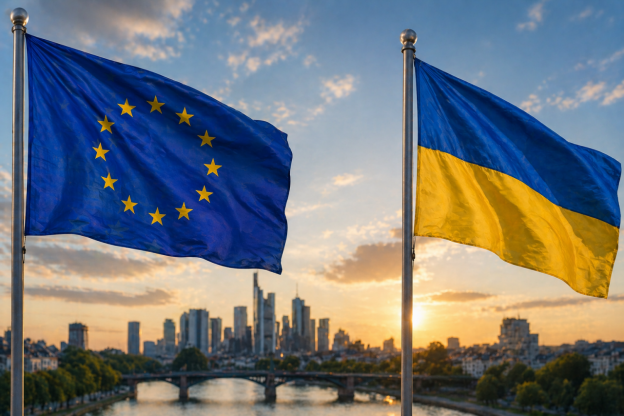
Note: Image is AI generated and for reference.
About the Author:
Amna Masood is a Geopolitical Analyst and BS International Relations student at National University of Modern Languages, Rawalpindi, Research Focus: Geopolitics of Europe.