
Author: Ayesha Tahir
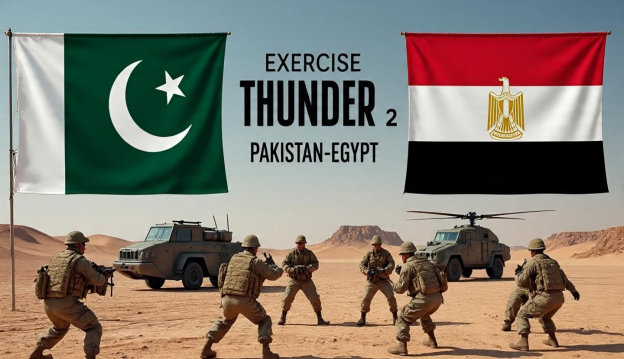
Islamabad, April 23, 2026 (GGPI): The Pakistan Army and the Egyptian Armed Forces have successfully concluded the joint military exercise “Thunder-II,” on April 22, 2026. It was a two-week intensive training program designed to enhance interoperability and strengthen defense cooperation between the two nations.
The closing ceremony was held on April 20, 2026 at the Special Operations School in Cherat, Khyber Pakhtunkhwa. This marked the culmination of rigorous tactical drills that began on April 6. The exercise featured elite combat teams from the Special Services Group of the Pakistan Army and the Egyptian Special Forces, specifically involving the Egyptian Paratroopers.
Thunder-II served as a premier platform for both forces to share their extensive combat experiences in counter-terrorism and urban warfare. Throughout the 14-day engagement, participating troops focused on refining drills, procedures, and techniques related to complex Counter-terrorism environments. The training included specialized maneuvers in hostage rescue, compound clearing, and high-intensity tactical operations tailored to address modern asymmetric threats.
Read More: Pakistan’s Motivations And Interests In Mediating Between USA And Iran: Balanced Diplomacy
The closing ceremony was attended by the General Officer Commanding SSG as the chief guest. Senior Egyptian officials, including the Commander of Egyptian Paratroopers, Major General Mohamed Saad Abdel Razik, and the Egyptian Defense Attaché, also witnessed the finale. Military leadership from both sides praised the exceptional professionalism and operational skill displayed by the troops.
The successful completion of Thunder-II highlights the deepening strategic partnership between Islamabad and Cairo. According to the Inter-Services Public Relations, the exercise further strengthened the longstanding and historic military-to-military relations between the two friendly countries. This collaboration follows a commitment by both nations to expand security cooperation to promote regional stability.
Note: The image is AI generated and for reference.
About the Author: Ayesha Tahir is a Student of International Relations at National University of Modern Languages, Rawalpindi, Research interest: Defense and strategic studies.
Pingback: Pakistan Calls for Respect of Libya’s Sovereignty, Emphasizes Libyan-Led Dialogue at UNSC -