
Author: Akbar Aziz
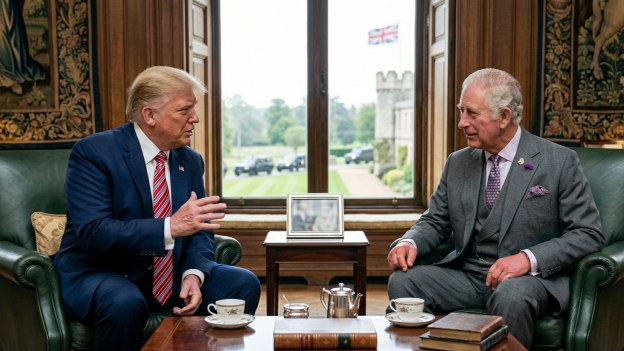
Washington DC, April 28, 2026 (GGPI): In a symbolic moment in transatlantic diplomacy and US-UK relations, King Charles III has arrived at the White House for a high-level summit with US President Donald Trump. The trip highlights fresh attempts to improve the long-standing strategic alliance between the United States and the United Kingdom.
The meeting is anticipated to concentrate on crucial areas of bilateral cooperation, such trade relations, security cooperation, and global governance. Analysts believe the visit has symbolic value as well as real consequences for improving diplomatic relations between the two allies.
King Charles III ‘s position as the British king is essential to promoting soft power diplomacy, using ceremonial influence to strengthen international alliances. The continued significance of royal diplomacy in complementing official statecraft is emphasized by his presence in the White House.
In theory, the visit shows a merging of realist and constructivist viewpoints. Realism continues to place a high priority on strategic interests, security alignment, and power politics, but its focus on shared identity, historical connections, and symbolism is in line with Constructivism views in international relations.
Read More: Ongoing Trade Tensions Between the United States and Canada Under USMCA Review
Frameworks such as NATO and Five Eyes alliance and longstanding cooperation on defense and counterterrorism form the foundation of the larger US-UK alliance. However, ongoing policy coordination is necessary due to growing global challenges, such as changing geopolitical dynamics and economic uncertainty.
The purpose of the visit is anticipated to be diplomatic, fostering trust and enabling more in-depth policy discussions as a confidence-building exercise. Interactions at this level are frequently useful in aligning strategic priorities and bridging political divides.
The conference emphasizes the continued importance of traditional diplomacy at the systemic level, where the interaction between monarchy engagement and state leadership influences global results. Furthermore, it demonstrates how well alliances can adapt to current issues.
In general, King Charles III’s visit to the White House represents a renewed dedication to US-UK cooperation, highlighting the value of diplomatic symbolism, strategic alignment, and alliance resilience in a changing global environment.
Note: Image is AI generated and for reference.
About the Author:
Akbar Aziz is a Geopolitical Analyst and BS International Relations student at the National University of Modern Languages, Rawalpindi. He focuses on Security Studies and Global Strategic Affairs. He is also a Research Contributor at Global Geopolitical Insight & The Opinion Desk where he writes on contemporary international issues.