
Abstract
This report examines the Digital Silk Road (DSR) — a key component of China’s Belt and Road Initiative — and its strategic consequences for global politics, technology, and economic power. The DSR aims to expand China’s digital infrastructure globally through technologies like 5G, fiber-optic networks, cloud computing, smart platforms, and artificial intelligence. This report explores how the DSR builds new digital connections, enhances China’s influence over partner states, affects global standards, and contributes to strategic competition with the United States and other Western powers. The findings show that while the DSR brings development opportunities, it also carries risks related to dependency, digital governance, and shifting power balances. Policy recommendations focus on balancing digital development with sovereignty, security, and international cooperation.
1. Introduction
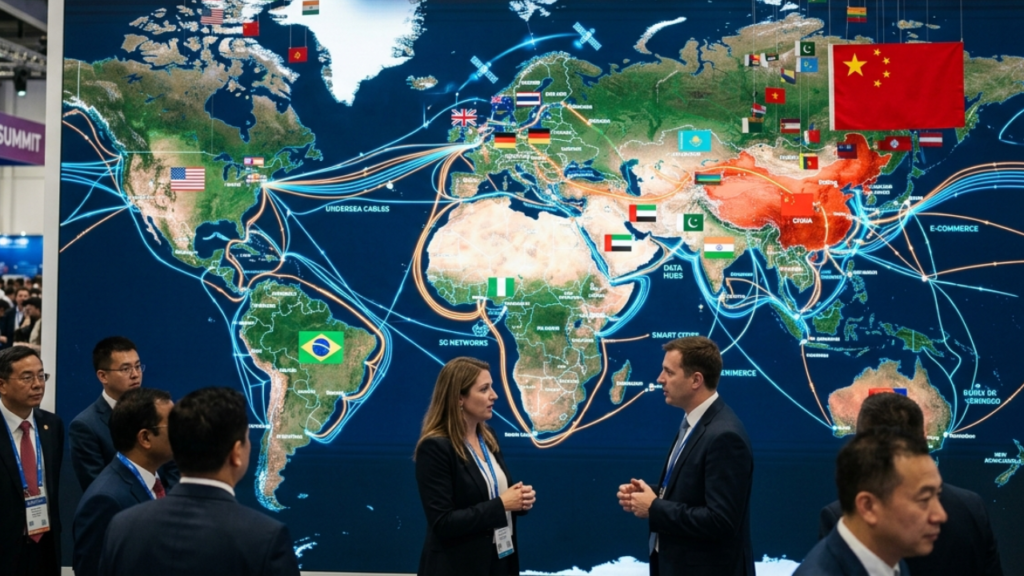
The Digital Silk Road (DSR) is China’s initiative to build and export digital infrastructure and technology as part of its broader Belt and Road Initiative. It was announced in 2015 and has since grown to include investments in 5G networks, fiber-optic cables, satellite systems, cloud computing, and digital services in many countries.
China states that the DSR is meant to improve global digital connectivity and support economic development. However, many analysts see the initiative as a strategic effort by China to shape global technological standards, expand its influence, and increase geopolitical power relative to Western countries, especially the United States.
This report explores the strategic implications of the Digital Silk Road for global power structures in the 21st century.
2. Background and Historical Context
The DSR emerged as part of China’s Belt and Road Initiative, a large-scale infrastructure development strategy focused on linking Asia, Europe, Africa, and other regions. While the original BRI focused on physical infrastructure like roads and railways, the DSR focuses on digital connectivity — including telecommunications, data networks, and high-tech systems.
China’s development of the DSR is linked to its broader goals of becoming a global leader in technology and reducing reliance on Western digital systems. By building digital infrastructure abroad, China increases the visibility and use of its companies (such as Huawei, Alibaba, and Tencent) and opens new markets for its technologies.
3. Research Methodology
This report uses qualitative research methodology based on secondary data. Sources include:
- Peer‑reviewed academic journals and research articles.
- Analysis by international think tanks and research institutions.
- Government and policy reports.
- Reputable media reports.
Data from these sources is analyzed to assess how the DSR affects economic development, global technology standards, geopolitical competition, and security outcomes.
4. Key Components of the Digital Silk Road
The Digital Silk Road includes several major elements:
a. Telecommunications Infrastructure: China invests in building 5G networks, fiber-optic cables, and satellite communication systems in partner states.
b. Digital Services and Platforms: Expansion of services like cloud computing, e-commerce platforms, and mobile payments under Chinese technology companies.
c. Standards and Governance: China promotes digital standards and governance principles (such as data sovereignty) that differ from Western norms.
These investments help developing countries improve connectivity but also integrate them into China‑linked digital ecosystems.
5. Strategic Implications
a. Economic and Development Impact
The DSR has helped many developing countries build digital infrastructure quickly, filling gaps where private investment was limited. Countries partnering with DSR efforts have often improved broadband access, mobile connectivity, and digital services.
However, reliance on Chinese digital infrastructure can create economic dependencies. China’s provision of infrastructure often comes with financing terms that deepen economic ties, raising concerns about debt and long-term reliance on Chinese technology.
b. Technological Influence and Standards
China’s push for its own technology standards (for 5G, data governance, digital platforms) gives it a stronger voice in shaping how global digital systems operate. Smaller states participating in the DSR may adopt Chinese norms, which can shape future international rules and market competition.
This influence challenges the traditional dominance of Western tech standards and contributes to a more multipolar digital order.
c. Geopolitical and Security Dimensions
The DSR is not only about infrastructure but also about strategic influence. China’s ability to build and maintain critical digital infrastructure gives it leverage over partner states. Some countries express concerns about digital surveillance, data access, and sovereignty due to Chinese involvement.
The United States and its allies have responded by promoting alternative digital connectivity strategies and by restricting Chinese technology in critical infrastructure in some regions.
6. Case Studies
Example 1: Southeast Asia
Several Southeast Asian countries have adopted Chinese 5G systems and digital services. This has improved connectivity but also increased China’s technological presence, leading to strategic balancing by local states to maintain autonomy.
Example 2: Africa
In parts of Africa, Chinese firms have helped build digital networks and smart city projects. While these contribute to economic growth, some nations worry about data security and dependency on external support.
7. Challenges and Risks
The Digital Silk Road carries several key challenges:
- Dependency on Chinese technology may limit domestic capacity building.
- Data governance issues, including privacy and surveillance concerns.
- Geopolitical tensions between China and Western powers, especially the United States.
- Standard competition, with different global approaches to digital regulation.
8. Policy Recommendations
- Strengthen Digital Sovereignty: Partner countries should establish strong laws for data protection, cybersecurity, and digital governance.
- Diversify Technology Partners: Avoid overreliance on a single provider by engaging multiple technology sources.
- Regional Cooperation: States can form alliances to build shared infrastructure under transparent rules.
- International Standards Engagement: Work with global institutions to set inclusive digital standards.
9. Conclusion
The Digital Silk Road represents more than infrastructure — it is a strategic instrument that influences global technology landscapes, geopolitical power balances, and economic relations. While it offers development benefits, it also poses risks related to dependency, governance, and international competition. The future of global digital order will depend on how states and international institutions respond to the opportunities and challenges posed by the DSR.
Note: Image is AI generated and for reference