
Introduction
In the evolving landscape of global defense technologies, hypersonic missiles have emerged as one of the most important innovations of the 21st century. Characterized by their extreme speed, advanced maneuverability, and reduced reaction time for defenders, hypersonic weapons are transforming how states think about deterrence, strategic balance, and military readiness. Unlike traditional ballistic missiles, hypersonic systems travel at speeds greater than Mach 5 (five times the speed of sound), operate at varying altitudes, and can execute unpredictable flight paths. These capabilities present new opportunities and challenges for global security as defense planners, policymakers, and military strategists adapt to this emerging reality.
The development of hypersonic technology is not limited to a single region or state. Multiple countries have invested in research and deployment, making it a truly global concern. This diversification reflects the technology’s perceived strategic relevance, not only for defense but also for deterrence, power projection, and national security planning. As hypersonic capabilities mature, they are reshaping strategic thinking, defense doctrines, and international arms control discussions.
What Are Hypersonic Missiles?
Hypersonic missiles represent a distinct class of weapons defined by their high velocity (Mach 5 and above) and their ability to maneuver during flight. There are two main categories:
- Hypersonic Glide Vehicles (HGVs) – These are launched by a rocket booster and then glide at hypersonic speeds toward their target on a controlled, maneuverable flight path.
- Hypersonic Cruise Missiles (HCMs) – These are powered by advanced engines called scramjets (supersonic combustion ramjets) that allow sustained hypersonic travel at low altitudes.
The combination of speed, unpredictable trajectories, and reduced detection time makes hypersonic missiles distinct from traditional ballistic or cruise missiles. These systems complicate defensive measures because they can evade existing early warning radars and anti‑missile systems more effectively than slower, more predictable weapons.
The Strategic Value of Hypersonic Systems
Hypersonic technology carries strategic value in several domains:
1. Deterrence
Hypersonic systems can enhance deterrence by increasing the credibility of a country’s response to aggression. When a potential adversary cannot easily intercept or predict the path of a hypersonic weapon, it introduces uncertainty into strategic calculations. This uncertainty can serve as a deterrent because the effectiveness of offensive weapons often shapes the behavior of other states in critical moments.
2. Rapid Response and Precision
Hypersonic weapons travel at speeds that enable rapid strike capability. This is particularly relevant in scenarios where time is limited or where immediate response could prevent escalation. Precision guidance systems further enhance their strategic value, enabling targeted effects with reduced collateral damage.
3. Strategic Flexibility
Because hypersonic missiles can be launched from land, sea, or air platforms, they provide strategic flexibility. They can be integrated into various defense architectures, contributing to deterrence, power projection, and area denial strategies. This flexibility makes them attractive to a range of militaries with different defense planning priorities.
4. Influence on Defense Postures
The presence of hypersonic capabilities can influence the defense postures of other states. When multiple actors possess these systems, it often encourages modernization of early warning networks, anti‑missile defenses, and cooperative defense mechanisms. In this way, hypersonic technology indirectly shapes defense policies beyond the states that possess the weapons themselves.
Global Developments and Multilateral Engagement
Hypersonic missiles are no longer limited to theoretical development. Several countries have made measurable progress in testing and integration. Investments in hypersonic research represent both technological advancement and strategic positioning within a competitive global landscape.
Global engagement on hypersonic systems has implications for military alliances, defense collaboration, and regional security dynamics. Diplomatic dialogues increasingly address how to manage emerging technologies and how to balance technological progress with stability.
Impact on Global Security and Strategic Balance
The introduction and potential deployment of hypersonic missiles have several implications for global security:
1. Speed and Surprise
Hypersonic weapons dramatically reduce the time between launch and impact. Traditional ballistic missiles follow more predictable trajectories, giving defenders time to detect and intercept. Hypersonic systems shorten this window, increasing the need for advanced early warning and response systems.
2. Evolving Defense Technologies
As offensive capabilities advance, so must defensive technologies. Missile defense systems are adapting to include sensors, tracking mechanisms, and interceptor capabilities that can respond to higher speeds and unpredictable flight paths. Investments in space‑based sensors, advanced radar networks, and artificial intelligence‑enhanced tracking systems are examples of how defense technologies evolve in response.
3. Arms Control and Transparency
Hypersonic capabilities raise questions about arms control and transparency. Traditional arms control agreements were negotiated in an era when strategic weapons had more predictable characteristics. Hypersonic systems challenge existing frameworks, prompting discussions about how to ensure mutual confidence and avoid miscalculations. International cooperation on norms, verification technologies, and confidence‑building measures becomes increasingly relevant.
4. Stability and Crisis Management
The presence of hypersonic systems affects crisis stability. Rapid strike capabilities can compress decision timelines, making it more difficult for leaders to assess intent and avoid escalation. This compression underscores the importance of clear communication channels, risk‑reduction mechanisms, and diplomatic engagement to prevent misunderstandings in tense situations.
Current Global Context (2026)
As of 2026, hypersonic technology continues to advance in research, testing, and field experimentation. Key developments include:
- Multiple countries have completed successful tests of hypersonic glide vehicles and hypersonic cruise missiles, demonstrating progress across different technological approaches.
- Defense research organizations increasingly integrate artificial intelligence and machine learning into hypersonic guidance systems to improve targeting accuracy and adaptive maneuverability.
- Early warning and tracking systems are under development to better monitor high‑speed objects in the atmosphere and near‑space domains.
- Multilateral dialogues on emerging defense technologies now include discussions on how to build transparency measures for hypersonic systems without restraining legitimate defense research.
These developments are not isolated to one region or alliance. They reflect a broader trend in which states recognize both the potential applications of hypersonic weapons and the need for systems that can respond effectively to high‑speed threats. This context is driving innovation, cooperation, and strategic planning around defense technologies.
Defense Architecture and Hypersonic Integration
Incorporating hypersonic systems into defense planning requires adjustments in how militaries approach command, control, communications, and intelligence. Hypersonic capabilities affect not only offensive doctrines but also how defense planners structure their broader military posture.
1. Detection and Tracking Systems
Hypersonic missiles travel at speeds that challenge existing sensor networks. This has led to investments in:
- Space‑based sensors that can detect high‑speed objects at various altitudes
- Advanced radar arrays capable of tracking objects with complex flight patterns
- Data fusion systems that integrate multiple information sources in real time
These technologies are being developed not only to monitor hypersonic trajectories but also to improve overall situational awareness.
2. Command and Decision Networks
The integration of hypersonic systems into military operations requires command and decision networks capable of rapid, secure communication. Decision‑making timelines compress when intercept windows are short. As a result, defense planners are emphasizing resilient communication architectures that can support quick yet informed responses under pressure.
3. Interceptor Technologies
While traditional missile defense systems were designed for slower, more predictable threats, newer interceptor concepts focus on high‑velocity challenges. These include:
- Directed energy systems such as high‑energy lasers
- Kinetic interceptors with enhanced speed and guidance
- Integrated air and missile defense networks that combine multiple sensors and shooters
These systems reflect the broader shift in defense technologies toward layered and adaptive defense mechanisms.
International Cooperation and Norms
Hypersonic technologies pose complex questions for international cooperation. States pursuing advanced defense capabilities also have an interest in avoiding unintended escalation and fostering stability. In this context:
- Multilateral forums have increasingly included defense technology dialogues as part of broader security cooperation.
- Confidence‑building measures, such as data exchanges on tests and notifications of launches, are being explored to reduce uncertainty.
- Discussions around norms and responsible conduct seek to balance innovation with the imperative of avoiding misperceptions.
These initiatives acknowledge that technological advancements do not occur in isolation but within a networked world where transparency, communication, and mutual understanding help reduce risks.
Ethical and Policy Considerations
The advancement of hypersonic systems raises ethical questions about the future of warfare and strategic stability. These include:
- The relationship between speed and humanitarian considerations
- The impact of reduced decision times on crisis stability
- The challenges of ensuring that emerging technologies are governed responsibly
Policymakers, scholars, and defense analysts discuss whether frameworks can be established to promote responsible development while avoiding arms races that erode stability. Ethical dialogue intersects with strategic planning, emphasizing that technology alone cannot determine outcomes — policy choices also matter.
Regional Dimensions of Hypersonic Development
Different regions approach hypersonic technology according to their strategic priorities and defense needs. For some regions, hypersonic systems are part of broader modernization efforts designed to enhance deterrence or regional stability. In others, investments in advanced defense technologies reflect integration into multinational security architectures.
These regional perspectives illustrate that hypersonic capabilities are not confined to a single theater of competition. Rather, they are shaping defense planning across continents, influencing how states assess risk, posture forces, and coordinate with partners.
Balancing Innovation with Stability
The development of hypersonic technologies underscores the broader challenge of balancing innovation with global stability. On one hand, technological progress can enhance defense effectiveness and deterrence. On the other hand, rapid advances can create uncertainty, compress decision times, and increase the complexity of strategic interactions.
Managing this balance requires:
- Investment in defensive and monitoring technologies
- Diplomatic engagement to clarify intentions and reduce ambiguity
- Institutional mechanisms that support risk reduction and crisis management
- Dialogue on norms related to testing, deployment, and notifications
This multifaceted approach reflects the reality that technology is only one aspect of global security. Strategic interactions involve policy, diplomacy, and institutional cooperation that extend beyond technical specifications.
Conclusion
Hypersonic missiles represent a significant development in modern defense technologies, with implications for strategic balance, military planning, and global security. Their speed, maneuverability, and advanced guidance capabilities introduce new considerations for deterrence, defense integration, and stability.
In the global context of 2026, multiple states are advancing research and development in hypersonic systems while also investing in the detection and defense technologies needed to respond to these challenges. This dual approach — innovation paired with adaptation — reflects a broader pattern in which emerging technologies reshape strategic thinking across regions.
Hypersonic missiles are not an isolated phenomenon; they are part of a larger shift in defense technologies that includes artificial intelligence, cyber systems, space sensors, and advanced materials. Together, these technologies are transforming how militaries prepare for future conflicts and how policymakers assess risk.
Understanding hypersonic capabilities and their implications requires not only technical knowledge but also awareness of strategic context, international cooperation, and ethical considerations. As such, hypersonic missiles are a central topic in contemporary defense discourse — a technology that highlights both the potential and complexity of security in a changing global order.
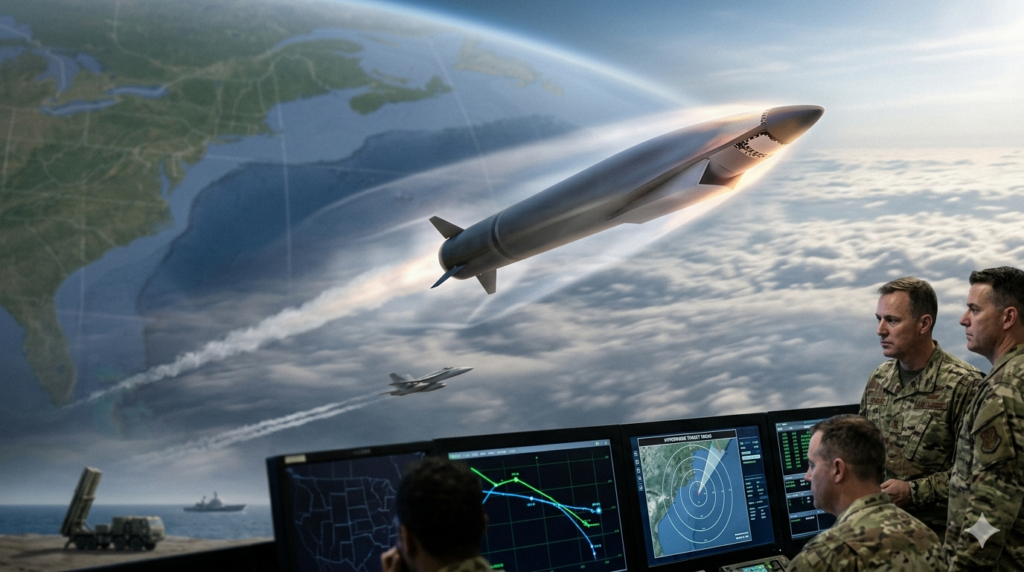
Note: Image is AI generated and for reference
Pingback: Exercise Flintlock 2026 Launches in Libya and Côte d’Ivoire to Strengthen Regional Security -