
Introduction
Any direct military confrontation between Iran and Israel would represent one of the most dangerous crises in contemporary Middle Eastern geopolitics. Beyond the immediate humanitarian costs, such a conflict would threaten regional stability, disrupt global energy markets, deepen sectarian divisions, and increase the likelihood of great-power confrontation involving the United States, Russia, and China.
For Pakistan, such a crisis would not be a distant regional event. Sharing a long border with Iran while maintaining close strategic and economic relations with Saudi Arabia, the Gulf states, China, and the United States, Pakistan would find itself directly affected by any prolonged conflict. In this context, Islamabad possesses a unique diplomatic opportunity to emerge as a credible mediator capable of facilitating dialogue and promoting regional de-escalation.
Although Pakistan lacks the military or economic influence of major powers, its balanced foreign policy, strategic geography, and growing diplomatic credibility provide it with comparative advantages that could contribute meaningfully to conflict management.
Why Pakistan Could Serve as a Mediator
Pakistan occupies a distinctive geopolitical position in West Asian affairs. Unlike many regional states that are directly aligned with either Iran or Israel, Pakistan has traditionally sought to maintain working relations with all major stakeholders.
Its 909-kilometre border with Iran makes stability on its western frontier a national security priority. At the same time, Pakistan enjoys longstanding strategic partnerships with Saudi Arabia, the United Arab Emirates, China, Türkiye, Qatar, and the United States. This balanced diplomatic posture allows Islamabad to maintain communication channels with opposing actors even during periods of heightened tension.
Historically, Pakistan has avoided becoming part of regional military blocs while advocating political dialogue, respect for sovereignty, and peaceful conflict resolution. This diplomatic flexibility strengthens its credibility as a potential intermediary.
Strategic Interests Behind Mediation
Pakistan’s interest in mediation would be driven less by idealism than by national interest.
The country’s economy remains heavily dependent on imported energy, much of which passes through the Strait of Hormuz. Any disruption to this critical maritime chokepoint would immediately increase oil prices, widen Pakistan’s trade deficit, intensify inflation, and place additional pressure on already fragile foreign exchange reserves.
Security considerations are equally significant. Escalating instability inside Iran could increase cross-border militancy, refugee movements, smuggling, and terrorism along Pakistan’s western border, particularly in Balochistan. Preventing regional instability therefore becomes an essential component of Pakistan’s internal security strategy.
Furthermore, Islamabad must carefully balance its close economic partnership with Saudi Arabia against its neighbourly relations with Iran. Effective mediation would enable Pakistan to preserve strategic neutrality without alienating either side.
Read More: US-Iran 14-Point Peace Plan Explained: Key Provisions, Global Impact, and Future Prospects
Pakistan’s Diplomatic Advantages
Several factors strengthen Pakistan’s potential diplomatic role.
First, Pakistan enjoys political trust within much of the Muslim world while maintaining constructive relations with Western capitals. This dual acceptance is relatively rare in contemporary regional politics.
Second, China, Pakistan’s closest strategic partner, has increasingly positioned itself as a supporter of diplomatic solutions in the Middle East, as demonstrated by its role in facilitating the Saudi-Iran rapprochement in 2023. Pakistan could therefore complement broader Chinese diplomatic initiatives without appearing to challenge existing international mechanisms.
Third, Pakistan has consistently supported negotiated settlements in regional disputes through forums such as the Organization of Islamic Cooperation (OIC) and the United Nations, reinforcing its image as a state that prefers diplomacy over military escalation.
These factors collectively enhance Islamabad’s capacity to facilitate informal dialogue, confidence-building measures, humanitarian coordination, and backchannel negotiations.
Regional and Global Significance
Successful Pakistani mediation would generate benefits extending far beyond bilateral relations.
At the regional level, it could help reduce military escalation, lower the risk of proxy warfare, and encourage confidence-building among rival states.
Economically, maintaining uninterrupted navigation through the Strait of Hormuz would stabilize global energy supplies and reduce volatility in international oil markets. Given that nearly one-fifth of the world’s traded oil passes through this waterway, its uninterrupted operation remains essential for global economic stability.
Diplomatically, successful mediation would strengthen Pakistan’s international profile as a constructive middle power capable of contributing to regional peace rather than merely responding to crises.
Such a role would also complement Pakistan’s broader foreign policy objective of shifting its international image from a security-centric state to a country actively engaged in preventive diplomacy and conflict resolution.
Constraints on Pakistan’s Mediation
Despite these opportunities, Pakistan’s diplomatic influence should not be overstated.
Its economic vulnerabilities limit its ability to sustain prolonged mediation efforts or provide financial incentives often associated with peace negotiations. Domestic political instability may also divert attention from foreign policy initiatives.
Moreover, the deep strategic mistrust between Iran and Israel cannot be resolved by a single mediator. External actors, particularly the United States, Russia, China, and major European powers, would continue to exercise decisive influence over any comprehensive peace process.
Pakistan’s role would therefore be facilitative rather than determinative. Its greatest contribution would lie in creating communication channels, encouraging confidence-building measures, and supporting multilateral diplomatic initiatives rather than imposing political settlements.
Policy Recommendations
To enhance its effectiveness as a regional mediator, Pakistan should adopt several strategic measures.
First, it should institutionalize preventive diplomacy by establishing a dedicated conflict-resolution unit within the Ministry of Foreign Affairs specializing in West Asian affairs.
Second, Islamabad should deepen diplomatic coordination with neutral regional actors such as Qatar, Oman, and Türkiye while maintaining close consultation with China and Gulf partners.
Third, Pakistan should reduce its vulnerability to external energy shocks by diversifying energy imports, expanding renewable energy projects, and strengthening strategic petroleum reserves.
Fourth, Pakistan should actively utilize multilateral forums, particularly the OIC, the United Nations, and the Shanghai Cooperation Organisation (SCO), to promote dialogue, humanitarian cooperation, and regional confidence-building.
Finally, strengthening border management and intelligence cooperation with Iran would help prevent cross-border militancy from undermining broader diplomatic efforts.
Conclusion
An Iran-Israel war would have profound consequences for regional security, global energy markets, and international diplomacy. Given its strategic geography, balanced foreign policy, and relationships with multiple regional stakeholders, Pakistan possesses a genuine opportunity to contribute to de-escalation efforts.
While Islamabad lacks the coercive leverage of major powers, effective mediation does not necessarily depend on military strength. Rather, it requires credibility, neutrality, sustained diplomatic engagement, and the ability to maintain communication between adversaries.
If Pakistan successfully develops these diplomatic capacities, it can gradually transform its regional role from that of a frontline security state to a responsible middle power contributing to peace, stability, and cooperative security across West Asia.
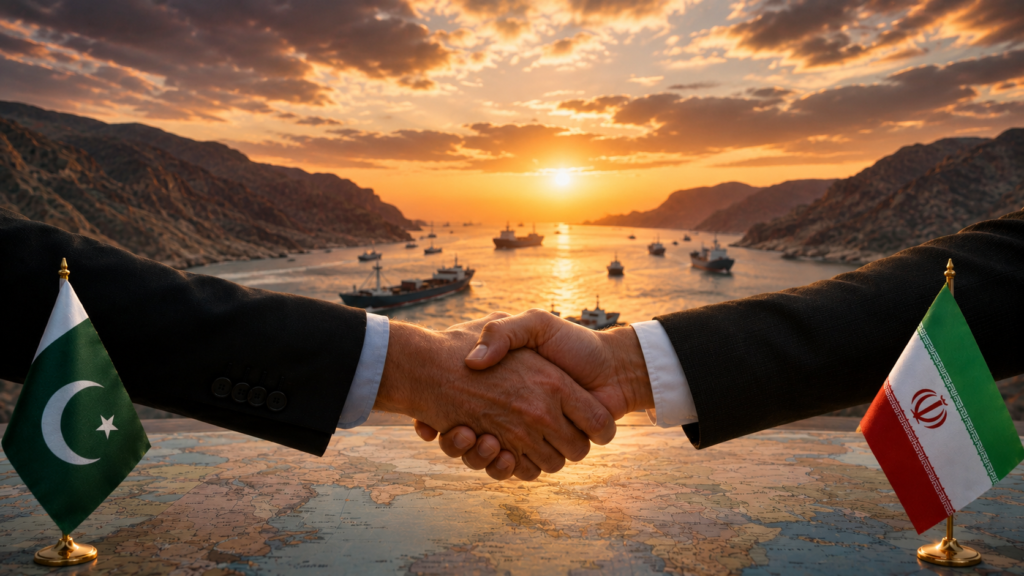
Note: Image is AI generated and for reference