
Author: Ayesha Munir
Executive Summary
The Gaza War has significantly influenced United States foreign policy in the Middle East. As a key ally of Israel and a major global power, the United States has faced the challenge of balancing security commitments, humanitarian concerns, and regional stability. This report examines how the conflict has affected American strategic interests, including support for Israel, countering Iranian influence, maintaining regional alliances, and ensuring energy security. It also analyzes the geopolitical implications of the war, policy responses adopted by Washington, and the challenges facing US policymakers. The report concludes that while the United States remains committed to protecting its strategic interests, long-term regional stability will require greater diplomatic engagement, humanitarian assistance, and efforts toward a sustainable political solution to the Israeli-Palestinian conflict.
Introduction
The Gaza War has become one of the most significant geopolitical events in recent Middle Eastern history, creating major implications for regional security and international relations. As a global power with long-standing political, military, and economic interests in the region, the United States has been required to respond to the changing strategic environment created by the conflict. The war has affected not only Israeli-Palestinian relations but also broader regional dynamics involving Iran, Arab states, and major international powers.
For decades, US foreign policy in the Middle East has focused on ensuring Israel’s security, maintaining regional stability, combating terrorism, securing energy routes, and protecting American strategic interests. The Gaza War has complicated these objectives by increasing political tensions, humanitarian concerns, and diplomatic challenges across the region.
This report examines the impact of the Gaza War on US foreign policy, analyzes America’s strategic interests in the Middle East, evaluates policy responses adopted after the conflict, and assesses the challenges and prospects for regional stability in the future
Background of the Gaza War
The Gaza War emerged from longstanding tensions between Israel and Palestinian groups, particularly Hamas. The conflict escalated into a large-scale military confrontation that resulted in significant casualties, infrastructure destruction, and a humanitarian crisis. The war attracted global attention and generated widespread debate regarding international law, human rights, and conflict resolution.
The United States responded by reaffirming its commitment to Israel’s security while simultaneously advocating humanitarian assistance for civilians affected by the conflict. The crisis quickly evolved beyond a localized confrontation, influencing regional security dynamics and raising concerns about the potential involvement of neighboring states and non-state actors.
The war also occurred during a period of shifting geopolitical alignments in the Middle East. Several Arab states had been pursuing normalization agreements with Israel, while Iran continued to expand its regional influence through allied groups across Lebanon, Syria, Iraq, and Yemen. These developments increased the strategic significance of American policy decisions.
Strategic Interests of the United States in the Middle East
Security of Israel
One of the most enduring pillars of US foreign policy in the Middle East is its commitment to Israel’s security. The United States views Israel as a critical strategic partner that shares political, military, and intelligence cooperation with Washington.
Following the Gaza War, the US government increased military assistance and diplomatic support for Israel while emphasizing Israel’s right to self-defense. Maintaining Israel’s military superiority remains a key objective because American policymakers consider Israel an essential ally in a volatile region.
However, unconditional support for Israel has generated criticism from both domestic and international audiences. As a result, US policymakers face the challenge of balancing security commitments with concerns regarding civilian protection and long-term regional stability.
Countering Iranian Influence
The Gaza War intensified concerns regarding Iran’s regional influence. American officials believe that Iran supports various armed groups that challenge US interests and those of its allies.
After the conflict, Washington expanded efforts to deter Iranian activities and reassure regional partners. The United States strengthened military deployments, enhanced intelligence cooperation, and coordinated closely with Gulf allies to prevent wider escalation.
Countering Iran remains a central element of US strategy because policymakers view Iranian influence as a challenge to regional order and American geopolitical interests.
Maintaining Regional Alliances
The Middle East remains strategically important due to its geographic location, energy resources, and political significance. The United States maintains extensive relationships with countries such as Saudi Arabia, Egypt, Jordan, and the United Arab Emirates.
The Gaza War tested these partnerships. Public opinion in many Arab countries strongly favored Palestinian civilians, placing pressure on governments that maintain relations with Washington. Consequently, the United States sought to reassure allies while encouraging diplomatic engagement and de-escalation.
Maintaining these alliances is essential for preserving American influence and ensuring cooperation on security, trade, and counterterrorism initiatives.
Counterterrorism Objectives
The United States continues to prioritize counterterrorism efforts throughout the Middle East. Policymakers remain concerned that prolonged instability could create opportunities for extremist organizations to recruit supporters and expand operations.
The aftermath of the Gaza War highlighted the importance of addressing underlying political grievances that contribute to radicalization. Consequently, US policy increasingly emphasizes a combination of security measures and diplomatic engagement aimed at reducing the conditions that foster extremism.
Geopolitical Implications of the Gaza War
Impact on US-Arab Relations
The Gaza War complicated America’s relationships with Arab partners. While many governments continued to cooperate with Washington, public criticism of US support for Israel intensified across the region.
This situation created diplomatic challenges for American policymakers, who sought to maintain strategic partnerships without alienating regional populations. The conflict demonstrated that public opinion remains an important factor in Middle Eastern politics and can influence bilateral relations.
Competition with China and Russia
The Middle East has become an increasingly important arena for great-power competition. China has expanded economic partnerships throughout the region, while Russia maintains significant influence through military and diplomatic engagement.
The Gaza War provided opportunities for both countries to present themselves as alternative partners to regional states. Consequently, the United States has sought to reinforce its diplomatic presence and demonstrate its continued relevance as a security provider.
American policymakers recognize that maintaining influence in the Middle East is not only a regional objective but also part of a broader global competition for power and influence.
Energy Security Considerations
Although the United States has reduced its dependence on Middle Eastern oil compared to previous decades, energy security remains a significant concern. Regional instability can disrupt global energy markets and affect economic conditions worldwide.
The Gaza War increased fears of broader regional conflict involving major energy-producing states. Therefore, US policymakers prioritized efforts to prevent escalation and protect critical shipping routes and energy infrastructure.
US Policy Responses after the Gaza War
Diplomatic Engagement
One of the primary responses of the United States was intensive diplomatic engagement. American officials conducted frequent consultations with regional governments, international organizations, and key stakeholders.
The objective was to prevent the conflict from expanding and to encourage negotiations aimed at reducing tensions. Diplomatic efforts also focused on securing humanitarian assistance and facilitating the delivery of aid to affected populations.
Humanitarian Assistance
The humanitarian consequences of the Gaza War generated significant international concern. In response, the United States increased humanitarian aid and supported initiatives designed to provide food, medical supplies, and reconstruction assistance.
This approach reflected recognition that long-term stability requires addressing humanitarian needs alongside security concerns. Humanitarian assistance also served as an important tool for improving America’s image in the region.
Strengthening Regional Deterrence
To prevent wider conflict, the United States strengthened its military presence in strategic locations throughout the Middle East. These measures were intended to deter potential adversaries and reassure allies.
Enhanced military cooperation with regional partners demonstrated Washington’s commitment to maintaining stability and protecting its strategic interests.
Renewed Focus on Political Solutions
The Gaza War revived discussions regarding a long-term political settlement to the Israeli-Palestinian conflict. American officials increasingly emphasized the importance of a negotiated solution that addresses the aspirations and security concerns of both Israelis and Palestinians.
Although significant obstacles remain, many policymakers view political dialogue as essential for preventing future cycles of violence.
Challenges Facing US Foreign Policy
Despite its extensive resources and influence, the United States faces several challenges in implementing its Middle East strategy after the Gaza War.
First, balancing support for Israel with growing international criticism remains difficult. Excessive alignment with one side risks undermining America’s credibility as a mediator.
Second, regional rivalries continue to complicate diplomatic efforts. Competition involving Iran, Saudi Arabia, Israel, and various non-state actors creates a highly complex security environment.
Third, domestic political divisions within the United States influence foreign policy decisions. Public debates regarding military assistance, humanitarian concerns, and international engagement shape policy outcomes.
Finally, increasing competition from China and Russia presents long-term challenges to American influence. These powers continue to expand their presence through economic investment, diplomatic initiatives, and strategic partnerships.
Future Prospects and Recommendations
The future of US foreign policy will largely depend on how effectively Washington balances its strategic interests with the changing realities of the region. The Gaza War has shown that military support alone cannot guarantee long term stability. Instead, a combination of diplomacy, humanitarian engagement , and regional cooperation will be necessary to address the underlying causes of conflict.
Conclusion
In conclusion, the Gaza war has become a major test for US foreign policy in the Middle East. While America continues to protect its strategic interests , it must also address humanitarian concerns and maintain trust among regional partners. The way Washington responds to these challenges will shape its influence in the region for years to come . On the other hand, successful US foreign policy will depend on its ability to combine military strength with diplomatic leadership, humanitarian engagement, and long-term conflict resolution efforts. By adopting a balanced approach, the United States can protect its strategic interests while contributing to a more stable and secure Middle East.
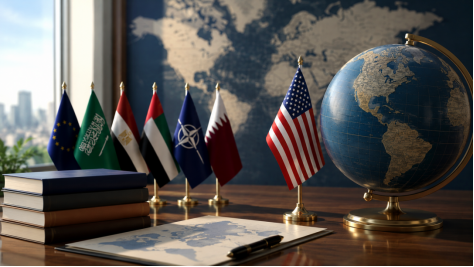
Note: The image is AI generated and only for reference.
About the Author:
Ayesha Munir is a BS International Relations student at the National University of Modern Languages (NUML), Rawalpindi, and a Research Fellow at Global Geopolitical Insight. Her research interests focus on Geopolitics of America.