
Author: Ayesha Munir
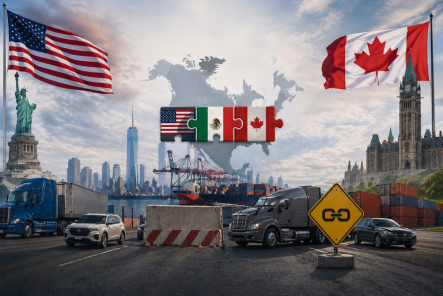
Washington, D.C. / Ottawa, April 28, 2026(GGPI): The ongoing trade tensions between the United States and Canada have intensified in April 2026 as both countries engage in negotiations over the future of the United States–Mexico–Canada Agreement. The agreement is currently under scheduled review, with key disagreements emerging over tariffs, trade rules, and economic policy direction.
The United States has adopted a more protectionist trade approach, aimed at strengthening domestic manufacturing and reducing reliance on imports. As part of this strategy, tariffs have been imposed on selected imports, including metals and industrial goods. U.S. officials have indicated that these measures are intended to safeguard national economic interests and ensure fair competition for domestic industries. Additionally, the United States has expressed interest in revising certain provisions of the USMCA to better align with its current economic and strategic priorities.
Canada, however, has raised concerns regarding these developments. Canadian authorities have emphasized the importance of maintaining a balanced and mutually beneficial trade framework. They argue that unilateral tariff measures undermine the spirit of free trade established under the agreement and place disproportionate pressure on Canadian industries. Canada has also highlighted the need for respecting economic sovereignty and ensuring that any revisions to the agreement are conducted through cooperative and transparent negotiations.
Read More: EU Pushes Southeast Asia to Diversify Oil Sources, Citing Russia War Concerns
Recent reports indicate that major automotive manufacturers have warned of potential disruptions to supply chains if uncertainty surrounding the agreement continues. The North American automotive sector is highly integrated, with production processes spanning across all three member countries. Any instability in trade relations could affect manufacturing costs, vehicle availability, and market pricing, particularly for affordable vehicle segments.
Both governments have reaffirmed their commitment to dialogue and continued engagement. Negotiations are ongoing, with working groups and committees actively reviewing key areas of concern. The outcome of this review process is expected to have significant implications not only for bilateral trade between the United States and Canada but also for the broader economic stability of the North American region.
Experts note that the current situation reflects a broader shift in global trade dynamics, where economic policy is increasingly influenced by national security considerations and domestic political priorities. In this context, the USMCA review represents a critical moment for redefining trade relations in North America.
Further updates are anticipated as discussions progress. Stakeholders across industries, particularly in manufacturing and energy sectors, continue to monitor developments closely. Both countries are expected to seek a resolution that balances economic competitiveness with long-term regional cooperation.
Note: Image is AI generated and for reference.
About the Author:
Ayesha Munir is a Geopolitical Analyst and BS International Relations student at National University of Modern Languages, Rawalpindi, Research Focus: Geopolitics of America