
Author: Amna Masood
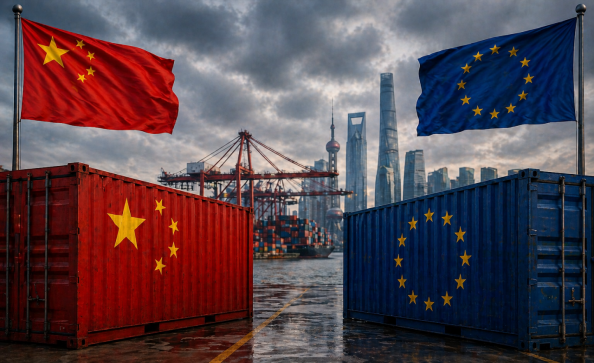
Brussels/Beijing, April 27, 2026 (GGPI): Tensions between China and European states have intensified, signaling a deepening strain in economic and strategic relations between the two sides.
The immediate trigger has been China’s decision to impose restrictions on the export of certain dual-use goods to several European entities. These materials, which carry both civilian and military applications, are critical to sectors such as advanced manufacturing, telecommunications, and defense technologies. The move is widely viewed as a response to Europe’s alignment with Western positions on sensitive geopolitical issues, particularly Taiwan. European officials have raised concerns regarding the potential disruption of supply chains and the broader implications for industrial resilience, with discussions underway in Brussels on diversification strategies and possible countermeasures.
Read More: China–Taiwan Tensions: Strategic Ambiguity under Strain
From Beijing’s perspective, the measures reflect an effort to safeguard national security interests and assert its stance on core strategic issues. China has consistently opposed foreign involvement in Taiwan-related matters, and recent actions indicate a willingness to employ economic leverage as a deterrent. Diplomatically, engagement between both sides continues but remains constrained by growing mistrust and unresolved disputes over market access, regulatory practices, and technology transfers.
From a broader geopolitical standpoint, this development highlights a shifting global landscape where economic interdependence is increasingly shaped by security considerations. Europe now faces the challenge of balancing its economic ties with China against its strategic alignment with Western partners, reflecting a gradual transition from cooperation toward calibrated competition.
While the situation remains contained, it signals a more assertive phase in China–Europe relations, where economic tools are being used with greater strategic intent.
Note: Image is AI generated for reference
About the Author:
Amna Masood is a Geopolitical Analyst and BS International Relations Student at National University of Modern Languages, Rawalpindi, Research Focus: Geopolitics of Europe