
Author: Ayesha Munir
Washington D.C., April 27, 2026 (GGPI): The United States and Mexico continue to manage ongoing migration and border security pressures along their shared frontier, as both governments maintain coordinated efforts to address irregular migration flows, enforcement operations, and regional policy alignment.
The US–Mexico border remains one of the most significant and closely monitored migration corridors in the Western Hemisphere. The situation is shaped by sustained movement of migrants from multiple Latin American countries, passing through Mexico toward the United States. These migration patterns are influenced by a combination of economic conditions, security challenges, and humanitarian factors across the region.
The United States continues to implement border management and enforcement measures aimed at regulating irregular crossings and maintaining national security. These measures include enhanced surveillance systems, operational deployment of border personnel, and administrative procedures related to asylum processing and immigration enforcement.
Mexico continues to play an important role as a transit country in regional migration dynamics. Mexican authorities are engaged in border management activities and coordination with US agencies to regulate migration flows and support humanitarian response mechanisms. However, migration management remains a complex and resource-intensive process due to the scale and variability of movement across multiple routes.
Read More: China–Europe Tensions Escalate Over Export Controls and Strategic Rivalry
The situation remains ongoing, with bilateral engagement between the United States and Mexico continuing through diplomatic and operational channels. Regular discussions focus on migration governance, border infrastructure coordination, information sharing, and legal migration pathways. Both countries maintain cooperation frameworks aimed at improving border efficiency and addressing operational challenges.
At the same time, differing policy approaches between stakeholders contribute to ongoing complexity in migration management. Issues such as enforcement intensity, asylum procedures, and responsibility-sharing mechanisms remain part of continued policy discussions.
Humanitarian considerations remain an important aspect of the situation. International and regional organizations have highlighted the need for safe, orderly, and humane migration processes, particularly for vulnerable individuals traveling through irregular routes. These concerns are part of broader global discussions on migration governance and protection standards.
Security-related aspects also remain a key focus. Authorities continue to address challenges linked to cross-border criminal networks involved in human smuggling and trafficking activities. These operational concerns are addressed through coordinated law enforcement efforts and intelligence cooperation between relevant agencies.
Experts describe the US–Mexico border situation as a long-standing structural migration and governance issue, characterized by continuous policy evolution and recurring migration flows. The complexity of the issue reflects broader regional disparities in economic development, security conditions, and migration pressures.
Despite these challenges, both governments reaffirm their commitment to continued cooperation and dialogue. Ongoing initiatives include strengthening legal migration channels, improving border infrastructure, and enhancing regional coordination mechanisms.
The US–Mexico border continues to represent a critical area of bilateral engagement, reflecting the intersection of migration management, security policy, and humanitarian considerations in the Americas.
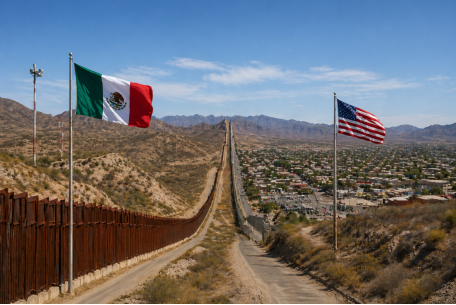
Note: Image is AI generated and for reference.
About the Author:
Ayesha Munir is a Geopolitical Analyst and BS International Relations student at National University of Modern Languages, Rawalpindi, Research Focus: Geopolitics of America