
Author: Malahat Hashmi
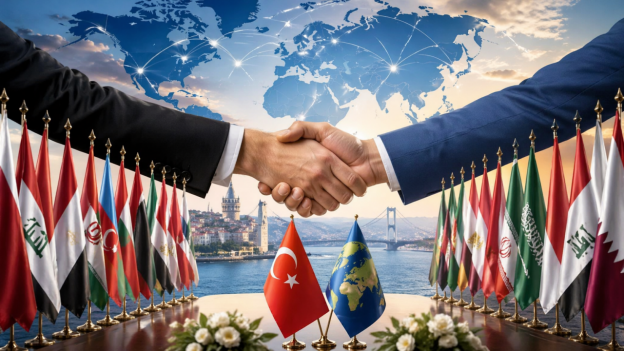
Ankara, April 22, 2026 (GGPI): Turkey has intensified its diplomatic engagement in the past 24 hours, focusing on strengthening regional stability amid ongoing tensions in the Middle East. Turkish officials have reiterated their commitment to active diplomacy, highlighting the country’s strategic location as a key factor in shaping regional outcomes.
According to recent official statements and international reporting, Turkey has continued consultations with regional stakeholders regarding the evolving situation in Syria. Discussions have focused on border security, counterterrorism efforts, and the management of refugee flows. These developments underline Turkey’s ongoing diplomatic engagement, which aims to reduce tensions and contribute to long-term regional stability.
As a member of NATO, Turkey maintains a significant role within Western security structures while simultaneously engaging with Middle Eastern actors. This dual approach reflects Turkey’s reliance on its strategic location, allowing it to act as both a regional power and a bridge between East and West. Analysts emphasize that such positioning strengthens Turkey’s influence in ongoing geopolitical negotiations.
In parallel, Turkey has signaled its readiness to support dialogue initiatives aimed at de-escalating conflicts in neighboring regions. Diplomatic sources indicate that Turkey is promoting multilateral discussions to address security concerns and humanitarian issues, particularly in conflict-affected zones. These efforts further demonstrate Turkey’s consistent diplomatic engagement, reinforcing its commitment to regional stability.
Economic considerations also remain central to Turkey’s foreign policy. Leveraging its strategic location, Turkey continues to facilitate trade and energy transit routes connecting Asia and Europe. Officials have stressed that economic cooperation is essential for sustaining regional stability, especially in a time of global uncertainty.
Read More: Middle East in Transition: The New Arena of Global Power Politics
Experts note that Turkey’s proactive diplomacy over the last 24 hours reflects a broader strategy of maintaining balance between competing regional and international interests. While challenges persist, including complex relations with Western allies and neighboring states, Turkey’s focus on diplomatic engagement and utilization of its strategic location continue to define its geopolitical role.
In conclusion, Turkey remains a central actor in regional affairs, actively promoting regional stability through sustained diplomatic engagement and effective use of its strategic location. Its role is expected to remain critical in addressing emerging geopolitical challenges.
Note: Image is AI generated for reference
About the Author:
Malahat Hashmi is a Geopolitical Analyst and BS International Relations student at National University of Modern Languages, Rawalpindi, Research Focus: Geopolitics of Middle East