
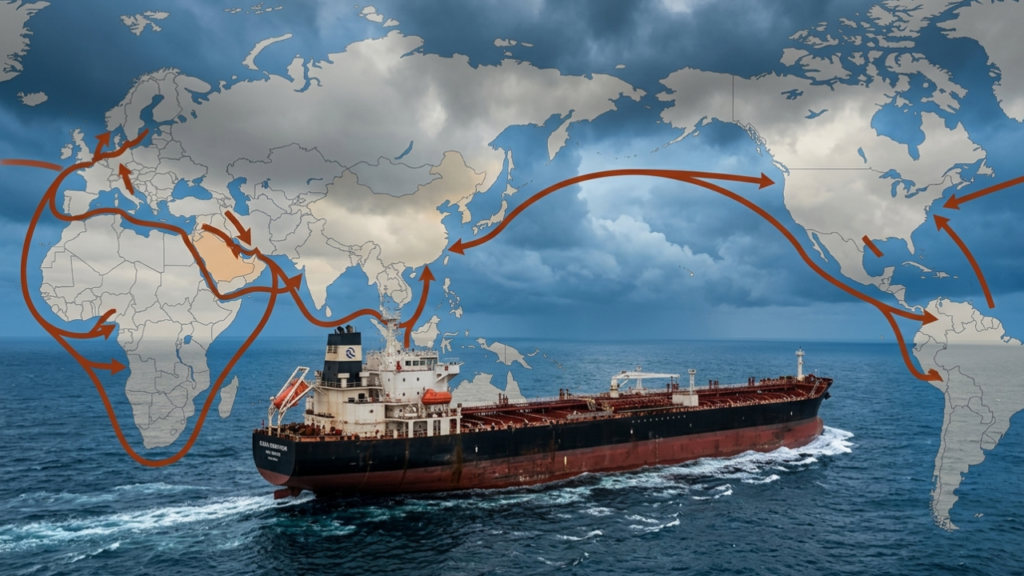
London / New York (GGPI): Global oil prices surged past the $100 per barrel mark recently as continued instability in the Middle East disrupted crude flows through the critical Strait of Hormuz, a route through which roughly 20% of the world’s oil and liquefied natural gas normally transits. The supply disruption is part of wider tensions linked to the ongoing conflict in the region.
According to shipping data compiled by analysts, tanker traffic through the strait fell from normal flows to near zero as companies rerouted vessels or suspended operations to avoid risks. This has effectively cut significant volumes of oil exports from the Gulf region, contributing to volatility in global energy markets.
Brent crude, a key benchmark for global oil pricing, peaked at around $126 per barrel in early March 2026, the highest level seen in nearly four years. Prices remain elevated even as some flows resume more cautiously, reflecting market concerns over possible prolonged disruption.
Read More: Middle East in Transition: The New Arena of Global Power Politics
Energy analysts warn the disruption marks one of the most significant shocks to the global oil market since the 1970s, with supply chains adapting to reduce dependency on the Hormuz route. Countries heavily reliant on Middle Eastern crude are exploring alternative logistics and strategic stock releases, while financial markets continue to react to price expectations and inflationary pressures.
Impact on Consumers and Economy
Higher oil prices have international spill‑over effects, including rising fuel costs for consumers, increased transport and production costs, and pressure on inflation rates in several economies. Central banks and economic policymakers are monitoring the situation closely as energy price shocks may influence interest rate decisions and growth forecasts.