
Author: Malahat Hashmi
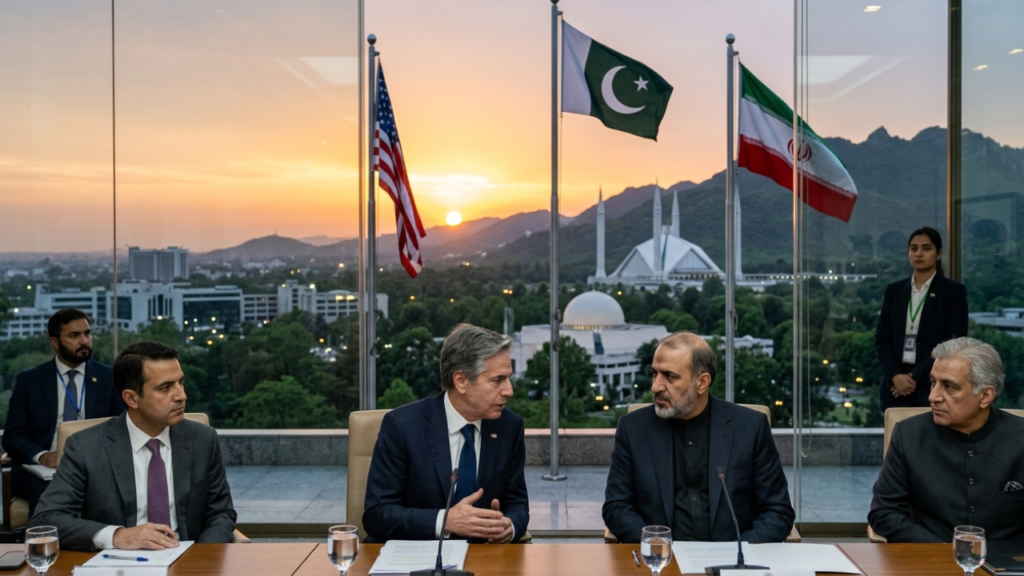
Islamabad / Tehran(GGPI): In a significant geopolitical development within the last 20 hours, Iran has signaled its refusal to participate in the upcoming round of peace negotiations scheduled in Islamabad, casting uncertainty over diplomatic efforts mediated by Pakistan. The decision comes at a critical moment as a fragile ceasefire between Iran and the United States approaches its expiration, raising concerns about renewed escalation in the region.
According to recent statements, Iranian officials have cited violations of the ceasefire agreement by the United States as the primary reason for declining talks. Key concerns include the continuation of a U.S. naval blockade and the reported seizure of an Iranian vessel near the strategically vital Strait of Hormuz. Tehran has described these actions as breaches of international law and the ceasefire framework, undermining trust and making diplomatic engagement difficult.
Read More:Pakistan Diplomatic Role Strengthens as Islamabad May Host US-Iran Talks
The refusal to attend the Islamabad talks highlights deep-rooted strategic mistrust between the two adversaries. Iranian leadership has emphasized that negotiations cannot proceed under conditions of coercion or military pressure. At the same time, U.S. officials have maintained their readiness to engage, with a high-level delegation reportedly prepared to travel to Islamabad should Iran reconsider its stance.
Despite Iran’s current position, diplomatic sources suggest that the refusal may not represent a complete breakdown of dialogue but rather a form of strategic signaling aimed at securing more favorable terms in future negotiations. Pakistan, acting as a neutral mediator, continues to advocate for dialogue and remains prepared to host talks if conditions become conducive.
From a geopolitical perspective, this development underscores the ongoing erosion of ceasefire credibility and the increasing complexity of conflict resolution in the Middle East. The Islamabad talks were initially viewed as a critical platform for de-escalation following earlier failed negotiations, but Iran’s decision has placed the entire diplomatic process on uncertain footing.
The implications extend beyond bilateral tensions. The Strait of Hormuz, a key global energy corridor, has already witnessed heightened instability, contributing to fluctuations in global oil markets and raising concerns about broader economic repercussions.This situation reinforces the interconnected nature of regional conflicts and global economic security.
In conclusion, Iran’s refusal to participate in the Islamabad talks represents a significant setback for ongoing peace efforts and highlights the fragile state of diplomacy in the region. As the ceasefire deadline approaches, the risk of renewed confrontation remains high. The international community, including mediators such as Pakistan, faces increasing pressure to facilitate dialogue, rebuild trust, and prevent further escalation in an already volatile geopolitical environment.
Note: Image is AI generated and for reference
About the Author:
Malahat Hashmi is a Geopolitical Analyst and BS International Relations student at National University of Modern Languages , Rawalpindi, Research Focus: Geopolitics of Middle East
Pingback: Mexico, Japan Agree on Energy Cooperation as Iran War Disrupts Supplies -