
Author: Hadiya Zainab
Beijing, April 22, 2026 (GGPI): China has been modernizing and advancing its military day by day, turning the People’s Liberation Army (PLA) into a world class force by the year 2049, focusing on AI, Stealth technology, and hypersonic weapons to counter superior adversaries, mainly the US.
Recently, China has produced an advanced amphibious assault ship: CNS Sichuan (Type 076) and has deployed it in the South China Sea for what China calls simple trials and testing, although it remains a matter of ambiguity due to the ongoing disputes over South China Sea. Wu Peixin, a military affairs analyst, noted that the Sichuan ranks among the world’s most advanced amphibious warfare ships in overall combat capability.
The upcoming sea trial in the South China Sea is expected to evaluate how well its core systems perform in open-sea conditions, including propulsion, power generation, electromagnetic catapult operations, and coordination between the ship and its aircraft.
Read More: Escalating Crisis in the Strait of Hormuz Raises Global Economic and Security Concerns
Geopolitically, the South China Sea is a region with multiple eyes on it and uncertainty over what part of the sea belongs to who. The deployment of CNS Sichuan (Type 076) raises its naval warfare capabilities and its ability to project power in the nearby maritime regions.
For the United States, the CNS Sichuan signals rising competition in the Indo-Pacific, pushing it to further strengthen its naval presence, alliances, and amphibious capabilities to maintain strategic balance, especially in areas like the South China Sea. For Russia, the impact is more indirect; while it remains politically aligned with China, Beijing’s rapid naval modernization highlights an imbalance in their partnership, with Russia largely observing rather than directly competing in maritime power projection. Overall, it reflects a shifting global order where China is emerging as a stronger naval challenger to U.S. dominance, while reshaping alignments among major powers.
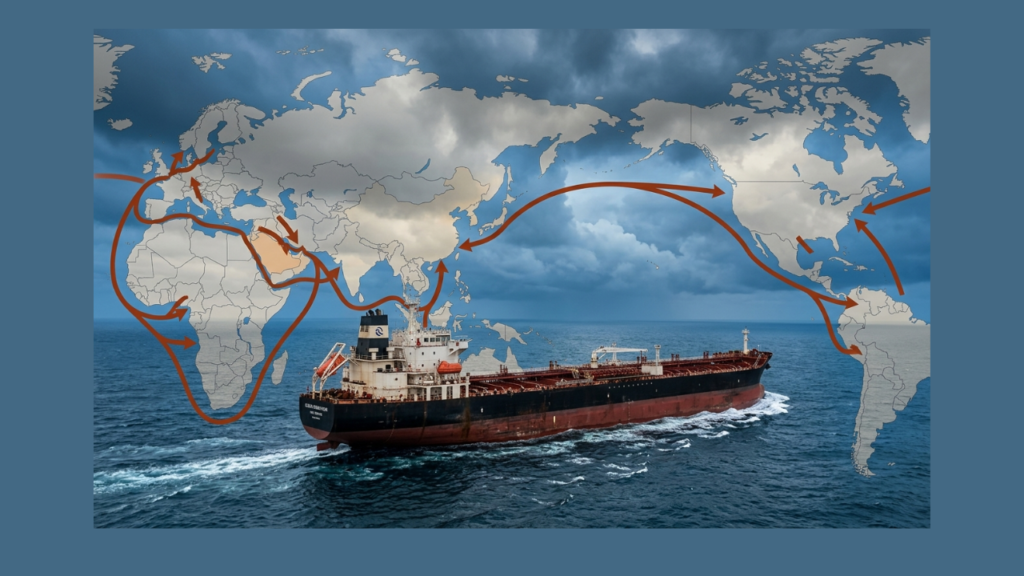
Note: The image is AI generated and only for reference.
About the author:
Hadiya Zainab is a BS International Relations student at the National University of Modern Languages (NUML), Rawalpindi, and a Research Fellow at Global Geopolitical Insight. Her research interests focus on defence studies, regional security, and contemporary geopolitical dynamics, with a particular emphasis on Asia.