
Introduction
The Middle East is no longer just a region of recurring crises. It is now one of the main theaters where global power politics is being tested, reshaped, and intensified. From the Gulf to the Eastern Mediterranean, from Gaza to the Red Sea, the region has become a strategic crossroads where the interests of the United States, China, Russia, regional monarchies, Iran, Türkiye, and non-state armed groups increasingly collide. This transition is not only military. It is economic, diplomatic, technological, and ideological. The result is a new Middle East in which old alliances are under pressure, regional states are asserting more autonomy, and outside powers are competing for influence in more complex ways than before. Current developments in early 2026 show that the region remains highly fluid. Humanitarian pressure in the occupied Palestinian territory remains severe, Red Sea insecurity continues to affect trade, and the IMF says recent regional tensions have already disrupted economic activity and pushed up energy prices and market volatility.
At the center of this transformation is a basic reality: the traditional regional order has weakened, but no stable replacement has fully emerged. For decades, the Middle East was often understood through a relatively simple frame. The United States was the dominant external power, Gulf security was heavily tied to Washington, energy politics shaped Western engagement, and major regional conflicts were interpreted through Arab-Israeli rivalry, Iran-Arab tensions, or the aftershocks of intervention in Iraq and Afghanistan. That picture no longer captures the whole story. Today, the region is moving into a looser, more competitive, and more transactional order. States are diversifying their partnerships, hedging their bets, and refusing to depend on one patron alone. This is not a temporary adjustment. It is a structural shift in regional politics.
Why the Middle East Matters in Global Power Politics
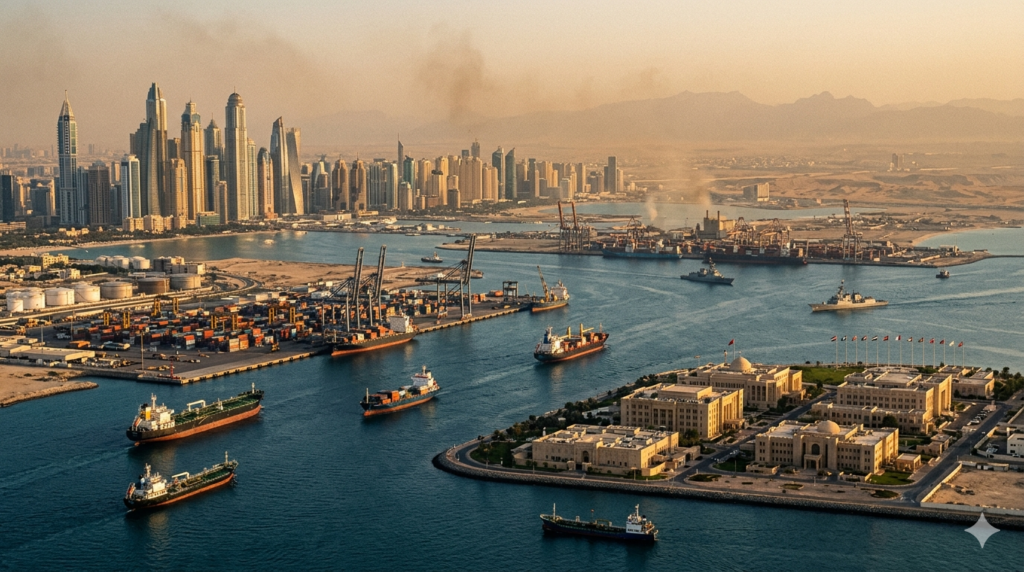
One reason the Middle East has become the new arena of global power politics is geography. The region links Europe, Asia, and Africa. It contains some of the world’s most important sea lanes, chokepoints, and energy corridors. The Strait of Hormuz, the Suez Canal, the Bab el-Mandeb, and the Red Sea all matter far beyond the region itself. Disruptions in any of these places affect global shipping, energy prices, inflation, and supply chains. That is why events in the Middle East can no longer be treated as merely regional. They now carry immediate global consequences. The Red Sea tensions, for example, have demonstrated how insecurity in one maritime corridor can quickly affect world commerce and international strategic calculations. CFR has continued to track the Yemen and Red Sea conflict as a major regional security concern, while the IMF has warned that wider Middle East developments are already affecting trade flows and financial stability.
The region’s strategic value also comes from its political symbolism. The Middle East is not only a corridor of trade and energy. It is also a space where issues of sovereignty, intervention, resistance, security, and legitimacy repeatedly shape global debates. Conflicts in this region quickly become internationalized because they involve core questions about world order. This is one reason why outside powers continue to invest diplomatic, military, and economic resources here even when they claim to be shifting their priorities elsewhere.
Current Situation in 2026
The current situation in the Middle East makes the article’s central argument even stronger. As of March 2026, the region is experiencing overlapping pressures rather than a single isolated crisis. In the occupied Palestinian territory, the humanitarian situation remains deeply serious. OCHA reported on March 19, 2026 that violence and displacement in the West Bank had intensified, with the monthly average of Palestinians injured and displaced in 2026 significantly higher than in 2025. OCHA also reported continued casualties in Gaza in early March despite ceasefire-related arrangements and partial humanitarian access. These realities show that the political and humanitarian consequences of the Gaza war are far from over.
At the same time, maritime insecurity continues to shape strategic calculations. Red Sea disruptions and tensions around key waterways remain central to international trade discussions. The IMF stated on March 3, 2026 that it was closely monitoring the Middle East because developments had already caused disruptions to trade and economic activity, along with surges in energy prices and volatility in financial markets. This means the region’s instability is not confined to local politics. It directly affects the wider global economy.
The economic picture is mixed but important. The World Bank says growth prospects across the broader MENAAP region are improving, with regional GDP projected to rise from 2.3 percent in 2024 to 2.8 percent in 2025 and 3.3 percent in 2026, supported by stronger performance in Gulf economies and oil importers. The IMF’s regional outlook also indicates that growth in the Middle East and North Africa is expected to rise in 2025 and 2026, though more slowly than earlier anticipated because of conflict and uncertainty. In simple words, the region is not collapsing into one uniform crisis. It is instead moving through a highly uneven transition where conflict, reform, competition, and adaptation are all happening at the same time.
Energy Politics and Economic Competition
Energy remains central to the region’s importance, even though the politics of energy are changing. The Middle East still holds a decisive place in global oil and gas markets, and Gulf producers continue to influence price stability and macroeconomic expectations. But energy politics today is not just about extraction. It is also about diversification, investment flows, green transitions, shipping security, and state capacity. According to the IMF, growth in the Middle East and North Africa is expected to strengthen in 2025 and 2026, though more slowly than previously expected, because of global uncertainty, conflicts, and trade tensions. The World Bank likewise projects moderate growth, but warns that uncertainty remains high because of conflict, climate shocks, and weak private sector performance in much of the region. These figures show that the Middle East is not simply a battlefield. It is also a region where economic competition and development strategy increasingly shape geopolitical influence.
Energy wealth is also being translated into strategic influence. Gulf states are using sovereign funds, infrastructure spending, and investment diplomacy to position themselves as regional hubs of finance, transport, and technology. This trend is changing the meaning of power in the Middle East. Influence no longer comes only from military capability or ideological appeal. It also comes from the ability to fund transformation, build logistics networks, and connect regional economies to global markets. In this sense, economic modernization itself has become part of power politics.
The Changing Role of the United States
Another major shift is the relative adjustment of American power. The United States remains the most influential outside actor in the Middle East, but its role is changing. Washington still has deep military partnerships, extensive basing arrangements, intelligence cooperation, arms relationships, and diplomatic leverage. Yet there is also a clearer pattern of strategic prioritization. American policy now reflects a desire to reduce open-ended burdens, focus more on competition elsewhere, and work through selective rather than absolute commitments. This does not mean the United States has left the region. It means that regional actors no longer assume an unlimited American security umbrella. That perception has pushed many states to pursue more flexible foreign policies. CFR continues to frame the Middle East as part of wider major-power rivalry, which reflects how Washington now sees the region not in isolation, but within a larger global strategic contest.
This change has had two major effects. First, it has encouraged local actors to invest more heavily in self-reliance and diversified diplomacy. Second, it has opened more room for other powers to grow their influence without directly replacing the United States. The American role remains strong, but it is no longer singular in the way it once seemed.
China’s Expanding Footprint in the Region
This strategic adjustment has created space for other powers. China has expanded its presence through trade, infrastructure, energy partnerships, telecommunications, industrial investment, and diplomatic engagement. Beijing’s approach is usually framed less in ideological language and more in terms of connectivity, markets, and stability. For many Middle Eastern states, China is attractive because it offers major economic engagement without attaching the same kind of political conditions often associated with Western actors. At the same time, China’s rise does not mean it has replaced the United States as a security provider. Its role is growing, but it is still uneven and more commercial than military. Yet even that matters greatly, because influence in the modern Middle East is increasingly measured not only by troops and bases, but also by ports, digital systems, supply chains, finance, and long-term contracts.
China’s growing presence also reflects a broader global trend. States across the Middle East increasingly prefer not to align themselves too tightly with a single great power. Instead, they seek practical partnerships in trade, investment, technology, and diplomacy. This multi-vector foreign policy gives regional actors more room to maneuver and reduces the dominance of any single outside power.
Russia’s Continued Strategic Relevance
Russia has also sought to preserve and project influence, particularly through military involvement, diplomatic signaling, and opportunistic engagement in conflict zones. Its intervention in Syria previously showed that Moscow could shape battlefield outcomes and secure a long-term foothold. Although Russia’s broader strategic bandwidth has faced strain, it still remains relevant in the Middle East because it can engage actors that do not always align with the West, use energy diplomacy, and exploit moments of Western hesitation. The region, therefore, has become a field where multiple major powers operate simultaneously, each with different tools and varying degrees of commitment.
Russia’s role also shows that power in the Middle East is no longer based on comprehensive dominance. Selective leverage can still matter greatly. A state does not need to control the entire region in order to affect its conflicts, calculations, or alignments. This selective influence is now a defining feature of the emerging regional order.
The Rise of Regional Strategic Autonomy
Regional powers are not passive in this competition. That is one of the most important features of the Middle East in transition. Saudi Arabia, Türkiye, Iran, Qatar, the United Arab Emirates, Israel, and others are increasingly acting with greater strategic autonomy. They engage Washington where useful, cultivate ties with Beijing where beneficial, negotiate with Moscow when necessary, and manage rivalries through selective de-escalation when costs become too high. This is not a region simply shaped from the outside. It is a region where local and middle powers are active architects of the new order. Their choices often determine whether external competition becomes manageable or explosive. CFR’s recent discussion of Saudi strategy reflects this larger pattern of regional actors recalibrating their foreign policies in a changing Middle East.
This regional autonomy is one of the clearest signs of transition. States are no longer willing to be seen only as clients or proxies of outside powers. They are trying to build room for independent action. In some cases, this leads to new diplomacy. In others, it creates new competition. But in both cases, it confirms that the Middle East is developing a more complex balance of power.
Iran and the Logic of Regional Competition
Iran remains one of the most consequential actors in this landscape. Its regional strategy combines state power, asymmetric tools, political networks, and deterrence logic. Iran’s influence has been visible in Iraq, Syria, Lebanon, Yemen, and maritime tensions in and around the Gulf. For many observers, Iran’s posture reflects a commitment to strategic depth, deterrence, and regional relevance in a highly contested environment. Iran is central to understanding the region’s power politics because it forces local rivals and global powers to calculate around deterrence, escalation, and alliance management. CFR’s latest tracker shows that the wider confrontation involving Iran, Israel, and the United States remains one of the most important variables in regional security.
Any serious discussion of the Middle East must therefore include Iran not as a side issue, but as a core part of the regional balance. Iran’s role matters because the region’s power structure cannot be understood without it. Its strategic importance is tied not only to military and political factors, but also to its ability to shape regional calculations across multiple fronts.
Gaza and the Regional Shockwave
The Gaza war and its wider consequences have also reshaped the regional environment. The conflict has not remained confined to one territory. It has affected regional diplomacy, public opinion, maritime security, normalization efforts, and the legitimacy of international institutions. It has also exposed the limits of the existing security architecture. Even when ceasefire efforts emerge, the political shockwaves continue across the Middle East. OCHA reporting from March 2026 shows that despite partial humanitarian access and diplomatic activity, the humanitarian situation remains acute and broader instability persists.
This interconnectedness is exactly why the Middle East now functions as a major arena of global power politics rather than a set of isolated disputes. Gaza is not only a humanitarian and political issue. It is also a strategic issue that shapes alliances, public legitimacy, and great-power diplomacy across the wider region.
The Red Sea Crisis and Maritime Security
The Red Sea and Bab el-Mandeb corridor now illustrate this point with unusual clarity. Shipping disruptions and attacks on commercial traffic have shown that non-state actors, regional conflicts, and great power responses are tightly linked. A local security breakdown can trigger multinational naval deployments, insurance shocks, rerouted trade, and renewed debate over deterrence. This is the modern Middle East in one picture: a region where state and non-state actors intersect, where economics and security cannot be separated, and where events rapidly spill into the wider international system. CFR continues to identify conflict linked to Yemen and the Red Sea as a major regional issue, while the IMF has noted broader trade and price effects from current Middle East tensions.
The Red Sea crisis proves that maritime security is no longer a technical matter. It is a central part of geopolitics. Whoever can shape the security of sea lanes can influence trade, prices, insurance, and diplomatic pressure. This is one more reason why the Middle East has become so important in global strategic competition.
Internal Transformation Within the Region
At the same time, a purely military reading of the region would be incomplete. The Middle East is also changing from within. Gulf states are investing in post-oil economic diversification, logistics, tourism, technology, and sovereign wealth strategies. According to the World Bank, regional GDP is projected to improve in 2026, driven partly by stronger Gulf performance. The IMF’s regional outlook similarly points to growth, even if that growth remains constrained by conflict and uncertainty. These internal reforms matter geopolitically because economically stronger and more diversified states gain greater diplomatic room to maneuver. Power in the region is increasingly linked to resilience, investment capacity, and the ability to shape networks of trade and innovation.
This internal transformation is especially important for understanding the future. The Middle East is not only reacting to external pressure. It is also producing new models of governance, investment, and statecraft from within. That makes the region more dynamic and more strategically significant.
The Collapse of Old Regional Binaries
This transition has also weakened older binaries. The Middle East can no longer be understood only as pro-West versus anti-West, or monarchy versus republic, or secular versus Islamist. The actual alignments are more fluid. States compete in one theater and coordinate in another. Rivals can restore relations while continuing strategic distrust. Security cooperation may coexist with media battles, economic competition, and ideological disagreement. This complexity makes the region harder to manage, but it also opens space for diplomacy. A fragmented order is dangerous, yet it also means no single actor can dominate without negotiating with others.
This collapse of old categories is one of the strongest signs that the region is entering a new phase. Simple labels no longer explain actual behavior. Policy is becoming more transactional, more issue-based, and more strategic. That is exactly what makes the Middle East such an important field of study for International Relations.
Major Risks Ahead
Still, the risks are severe. The danger is not only war between states. It is prolonged instability, miscalculation, economic disruption, humanitarian collapse, and the further weakening of international norms. When the region becomes a stage for overlapping rivalries, local populations often pay the highest price. Syria, Yemen, Lebanon, Gaza, and other crisis zones demonstrate that geopolitical contest without political settlement produces long-term suffering. OCHA’s March 2026 reporting from the occupied Palestinian territory and the IMF’s March 2026 statement on regional tensions both reinforce the point that the current moment remains highly fragile.
At the same time, the risks should not hide the fact that many regional actors are also trying to avoid full-scale escalation. The transition is dangerous, but it is not completely without restraint. That tension between rivalry and restraint will likely define the next phase of Middle Eastern politics.
Lessons for International Relations
Middle East now offers one of the clearest examples of emerging multipolarity. It shows how global order is changing from hierarchy to competition, from fixed blocs to flexible coalitions, and from single-patron dependency to multi-vector diplomacy. It also demonstrates that regional politics and global politics are no longer separable categories. What happens in the Middle East affects energy markets, trade routes, migration flows, security doctrines, and the credibility of world powers.
It also teaches another important lesson. Power today is not only military. It is financial, digital, logistical, diplomatic, and narrative. States compete through ports, data, trade corridors, aid, technology, and influence over public opinion. The Middle East captures all these dimensions at once. That is why it has become a model case for understanding 21st century geopolitics.
Conclusion
In conclusion, the Middle East in transition is not merely unstable. It is strategically central. It has become the new arena of global power politics because it combines geography, energy, maritime routes, ideological conflict, economic transformation, and external rivalry in one highly compressed space. The United States remains influential, but no longer uncontested. China is expanding through economic statecraft. Russia retains selective leverage. Regional powers are more assertive and less dependent. Iran remains an important and unavoidable part of the regional strategic equation. Meanwhile, the current situation in 2026 shows that humanitarian distress, maritime insecurity, economic uncertainty, and shifting alliances are all unfolding at the same time. OCHA, the IMF, and the World Bank each point to different aspects of this reality, but together they show a region under pressure and in motion.
The future of the Middle East will depend on whether competition can be managed without sliding into broader war. But one fact is already clear: the region is no longer on the margins of world politics. It is now one of its central battlegrounds.
Pingback: Turkey Expands Diplomatic Engagement to Strengthen Regional Stability Amid Ongoing Regional Challenges -