
Author: Malahat Hashmi
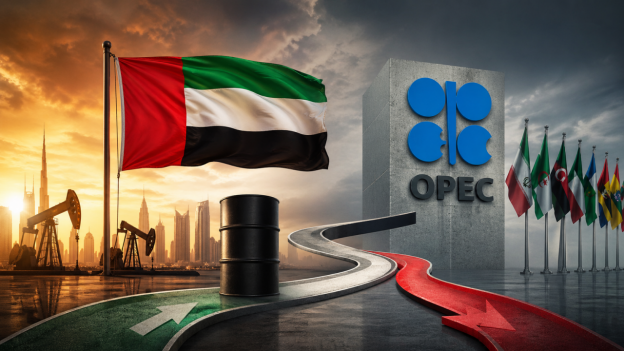
Abu Dhabi, April 29, 2026(GGPI): The Organization of the Petroleum Exporting Countries (OPEC) is facing a significant structural shift as the United Arab Emirates (UAE) has announced its decision to exit the organization, marking a major turning point in Middle Eastern energy politics. The move reflects Abu Dhabi’s intention to pursue a more independent and flexible oil production strategy amid evolving global energy dynamics.
According to recent developments, the UAE’s withdrawal is driven by its long-term economic vision, which prioritizes maximizing production capacity and diversifying revenue streams beyond the constraints of collective output quotas. As one of the region’s key oil producers, the UAE has increasingly invested in expanding its production infrastructure, making OPEC-imposed limits less aligned with its national interests.
Energy analysts suggest that this decision could reshape traditional alliances within the oil market. OPEC has historically functioned as a coordinated bloc to stabilize oil prices through production adjustments. However, the UAE’s exit signals growing fragmentation within the organization, raising concerns about its ability to maintain unified control over global oil supply.
Read More: Oil Prices Surge Amid Middle East Tensions
The timing of the announcement is particularly significant, as global oil markets are already under pressure due to ongoing geopolitical tensions and supply disruptions in the Middle East. The UAE’s independent approach could contribute to increased market volatility, potentially affecting oil prices and influencing global inflation trends.
Regional implications are also substantial. The move may encourage other member states to reconsider their positions within OPEC, especially those seeking greater autonomy in managing their energy resources. At the same time, it highlights a broader shift in Middle Eastern geopolitics, where economic pragmatism is increasingly taking precedence over traditional cooperative frameworks.
International observers view the UAE’s decision as both an economic and strategic recalibration. While it provides the country with greater control over its energy policy, it also introduces new uncertainties into an already fragile global energy system. The long-term impact will largely depend on how OPEC adapts to this development and whether it can maintain cohesion among its remaining members.
Overall, the UAE’s exit from OPEC represents a defining moment in the evolution of global energy governance. It underscores the changing priorities of major oil-producing nations and signals a transition toward more individualized approaches in managing energy resources within an increasingly complex geopolitical landscape
Note: Image is AI generated for reference
About the Author:
Malahat Hashmi is a Geopolitical Analyst and BS International Relations Student at National University of Modern Languages, Rawalpindi. Research Focus: Geopolitics of Middle East.