
Author: Akbar Aziz
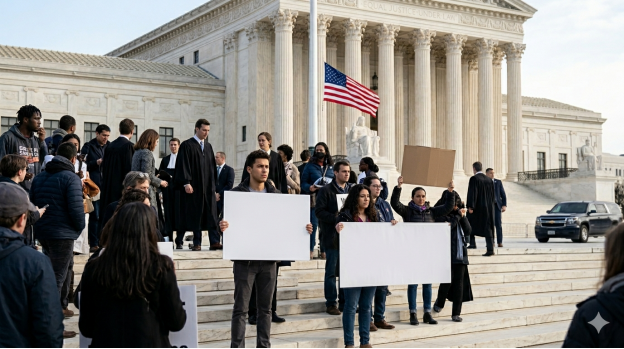
Washington DC, April 29, 2026 (GGPI): The US Supreme Court is considering a contentious decision by US President Donald Trump that targets Syrian and Haitian immigrants, bringing immigration policy, executive power, and constitutional law to the forefront of the national discussion. The issue has far-reaching ramifications for U. S. immigration law enforcement as well as for larger issues of human rights.
The government’s attempts to limit or repeal protections for certain migrant groups are the subject of the legal challenge, which raises concerns about the scope of presidential authority and the judiciary’s responsibility in protecting civil rights. The result, as observers point out, may alter the equilibrium between humanitarian responsibilities and national security.
The issue centers on rules impacting programs that have historically protected people from conflict-affected areas, such as Temporary Protected Status (TPS) and other forms of immigration relief. While supporters see the measures as essential for border control and national sovereignty, detractors claim they unfairly target vulnerable groups.
From a theoretical standpoint, the case illustrates a conflict between Realist priorities for state security and border management, and Liberal values that place emphasis on human rights, the rule of law, and institutional oversight. The Supreme Court’s examination emphasizes how important legal organizations are in resolving this fundamental disagreement.
Additionally, the subject strikes a chord in the larger context of American domestic politics, where immigration reform is still highly divisive. The national political scene is still being shaped by discussions about asylum law, refugee protection, and deportation procedures
Read More: Pakistan and Sri Lanka Commence Joint Counter-Terrorism Exercise “Shake Hands-II” at Tarbela
The case may have an impact on the United States’ reputation on the world stage, notably in terms of its adherence to international norms and dedication to protecting refugees. For indications regarding the future course of American policy, allies and international organizations are keeping a careful eye on the proceedings.
The instance serves as a reminder of the systemic interaction of law, politics, and security in modern government. The result may serve as a model for how states handle migration emergencies while taking into consideration both their strategic interests and their legal obligations.
With significant ramifications for domestic governance, international legitimacy, and the shifting discussion on migration and human rights, the Supreme Court’s consideration of Trump’s action against Haitian and Syrian immigrants marks a turning point in American immigration law.
Note: Image is AI generated and for reference.
About the Author:
Akbar Aziz is a Geopolitical Analyst and BS International Relations student at the National University of Modern Languages, Rawalpindi. He focuses on Security Studies and Global Strategic Affairs. He is also a Research Contributor at Global Geopolitical Insight & The Opinion Desk where he writes on contemporary international issues.